
Arctic dogs, husky dogs and sled dogs – what’s the difference?
I’m going to start with a short answer to this question….
… In a nutshell, Arctic dogs are dogs which have been bred over centuries to withstand the cold and harsh conditions in the Arctic regions. There are many types of Arctic dogs, and some of these have the word ‘husky’ in their name. More specifically, some of the Arctic dog breeds are particularly suited to being trained to pull sleds, and these dogs (surprise surprise) are called sled dogs. Then, just to confuse things, sometimes, people refer to all Arctic dogs as husky dogs.
Moving on, there are some specific characteristics of the Arctic dogs, which are not found in other dogs:
- They thrive on a high fat diet, which is essential in the cold Arctic climate. (This is similar to the adaptation of the Polar Bear to its arctic surroundings in comparison to the Brown Bear)
- They can run and pull sleds in low-oxygen conditions
- They can also regulate their own body temperature, which not only helps them to deal with cold, but also helps them to cool down after exerting high levels of energy. (The woolly mammoth was also able to do this)
Interestingly, some of these characteristics were also present in the DNA of the 10,000 year old Zhokhov dog found in Eastern Siberia. (Refer to my previous post about the Origin Of Dog Sledding).
The key point is that Arctic dogs have been bred for centuries to cope with their brutal environment.
In addition, more specific breeding lines arose with performance attributes especially suited to the work the dogs were doing, often associated to a particular region, group of people and/or period. (e.g. reindeer herding, hauling supplies to the gold fields, and later, dog sled racing)
At this point, I became curious about how the word ‘husky’ came into the picture.
It turns out that ‘husky’ was originally used to describe Arctic people since it was a derivation of the word ‘eskimo’ which in turn came from various native words such as Uskee, Uskimay and Huskemaw. The dogs used by the native Arctic people were therefore “the huskies’ dogs”. You can see where this went.
So, to reiterate, a sled dog is simply an Arctic dog (or husky dog, if you want to be a bit more blasé about your terminology) which has been trained to pull a sled!
I gathered some information about the main breeds of dogs used for dog sledding…..
Siberian Husky
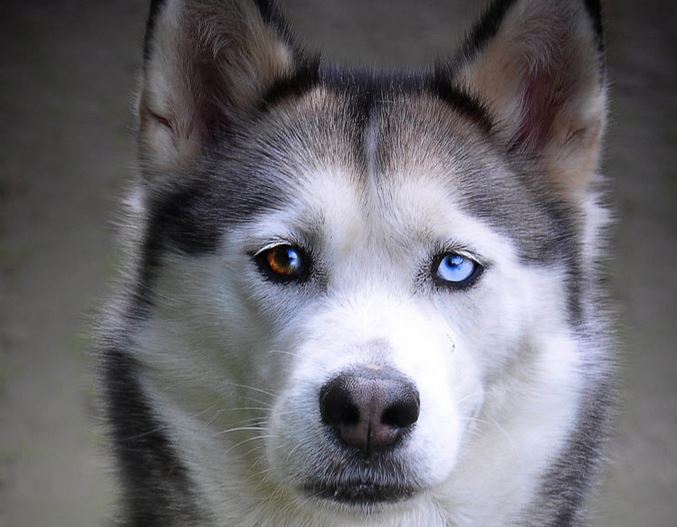
When I think of dog sledding I have an image in my mind of the type of dog which is pulling the sled. It is obvious now that I am thinking of a Siberian Husky. These dogs are of medium size and are characterised by their strikingly blue eyes, sometimes even having one blue and one brown eye. They originated in Eastern Siberia where the breed was developed by the Chukchi people, who also handed down a legend about their origin. The story is told about how the Siberian Husky was born from the union of a wolf and the moon (hence the crescent shaped tail). This explains why both wolves and huskies howl at each full moon – longing for the return of the moon to them.
Siberian Huskies are intelligent, but stubborn. And apparently, they need to understand the ‘why’ of what a musher asks them to do before they comply. Just exactly how this is communicated I’m unsure. But from my reading so far I can truly believe it; regardless of the type of dogs used, the musher and his/her dogs, if properly trained and prepared, are a formidable team the members of which have their specific roles (including the musher) which are built on trust and respect.
Alaskan Malamute
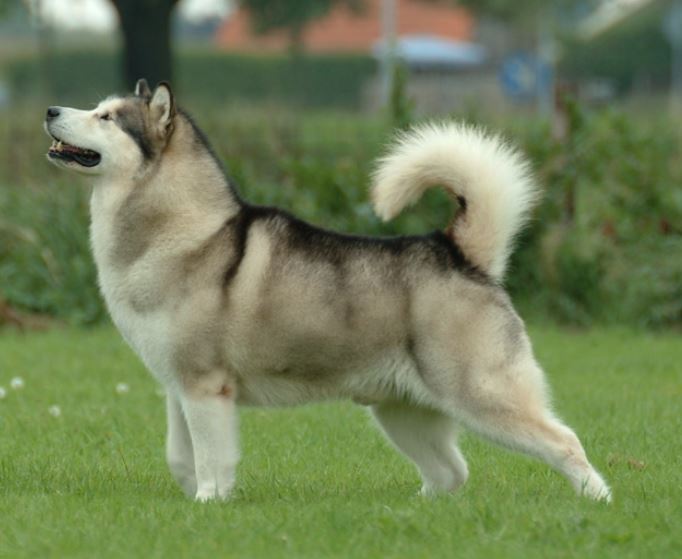
The Alaskan Malamute is one of the oldest Arctic breeds of sled dog. They were originally bred for pulling loads rather than for racing, and so are very powerful rather than fast. They received their name from the Mahlemut people who bred these dogs for supporting them in their harsh conditions; hauling and hunting, as well as being devoted and protective.
Samoyed
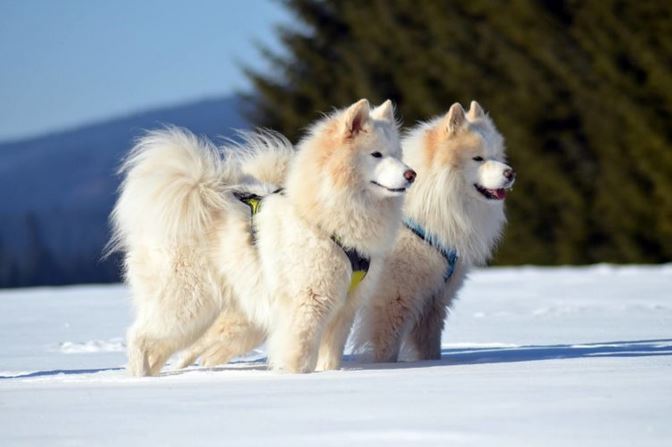
Like the Siberian Husky, Samoyeds also originated in Siberia, and were originally bred by the Samoyedic tribes. They are always white or cream coloured, with a very thick coat. Originally bred to herd reindeer, to hunt and to pull sleds, Samoyeds are not as strong and fast as other sled dog breeds. They are, however, affectionate and sociable, even if they do have the reputation of barking more than most of the other sled dogs.
Greenland Dog
The Greenland Dog is a UNESCO Heritage Breed, and to protect the purity of the breed it is forbidden to bring outside dogs into Greenland. As the traditional dog of the Greenland Inuit people it is hard-working, versatile, strong and fast, used to living in packs, and preferring the challenges of new and untouched trails…. it is the epitome of the sled dog!
Greenland Dogs were the obvious choice for Amundsen to take when he went to the South Pole.
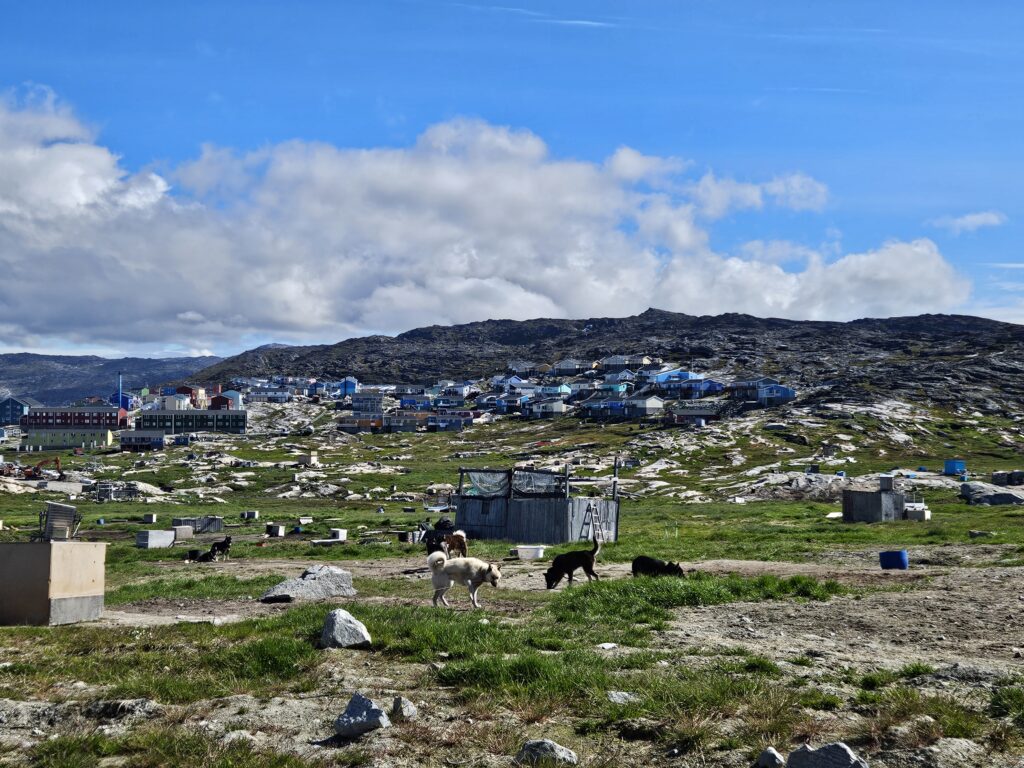
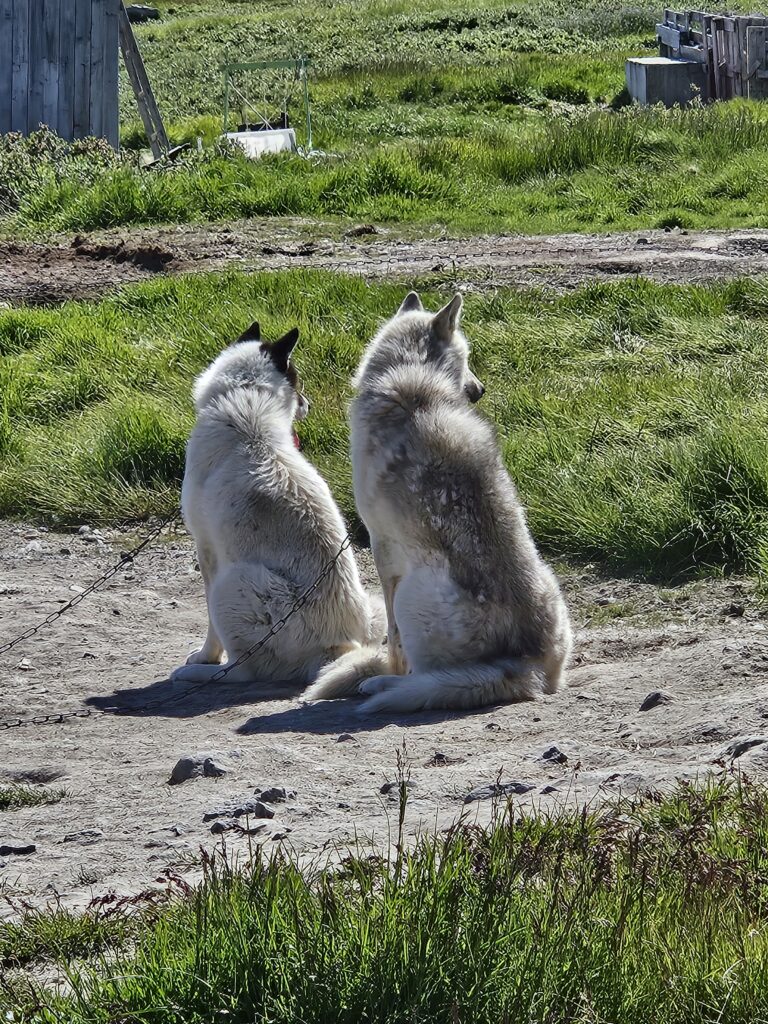
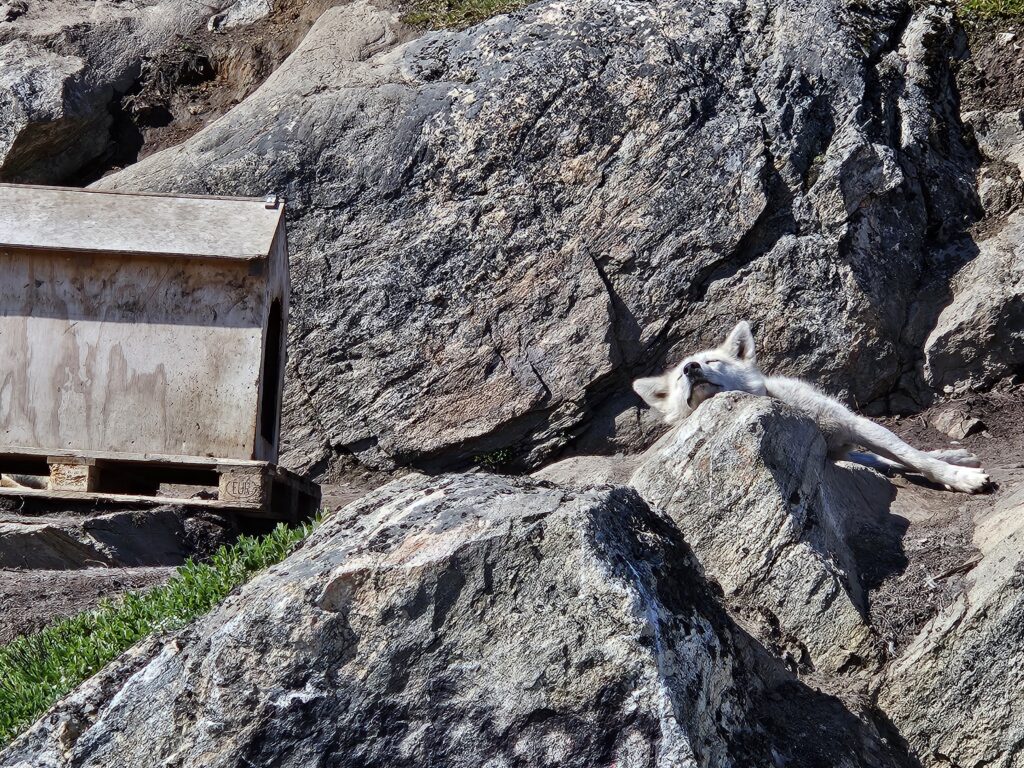
When I was in Greenland last year we saw a paddock of Greenland Dogs. We learnt that people are not permitted to keep dogs in their homes, as they bark and misbehave. Therefore, the whole town (in this case Illulissat) keeps their dogs in an area specially designed to accommodate many of them. They each had their own space (unfenced), plus a kennel to which they were chained. It was Summer when I was there and they were all happily sleeping or resting. It was explained to me that they pretty much slept through the whole of summer, partly because there is no dog sledding to be done, but also because it is dangerous for their body temperature to rise, which happens if they do any serious exercise in the summer temperatures.
Canadian Eskimo Dog
The Canadian Eskimo Dog is genetically very similar to the Greenland Dog, as they originated from the same Siberian ancestry when the Thule people brought their dogs to the Arctic region. The breed nearly vanished by the 1970s, but conservation programmes appear to have revived the numbers.
Alaskan Husky
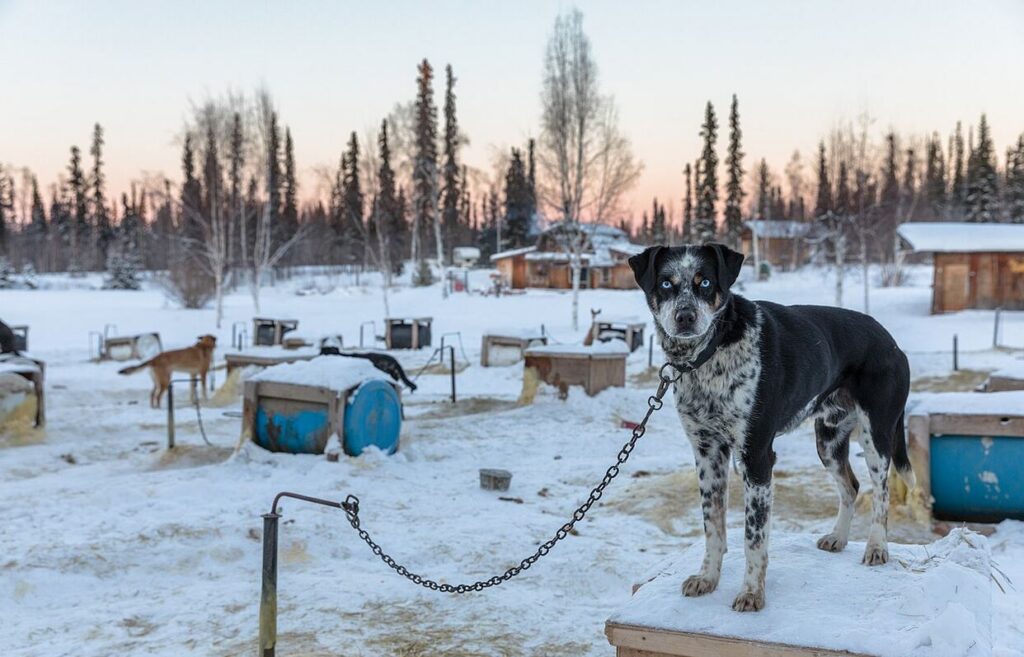
Alaskan Huskies are not an actual breed, rather they are a type of sled dog bred specifically for dog sledding in the early twentieth century, mainly during the gold rush era. Having their origins generally in breeds such as Siberian Huskies and Malamutes, the Alaskan Husky is incredibly athletic and extremely well suited to the cold conditions of the Arctic region.
Interestingly the majority of the Iditarod dogs are Alaskan Huskies.
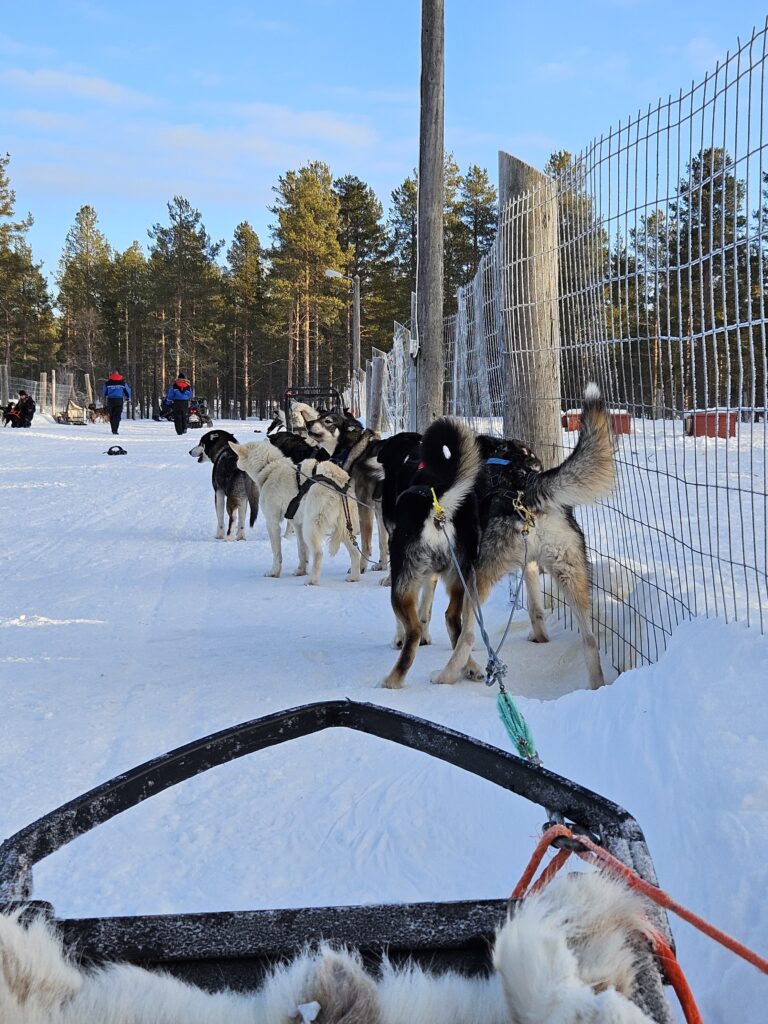
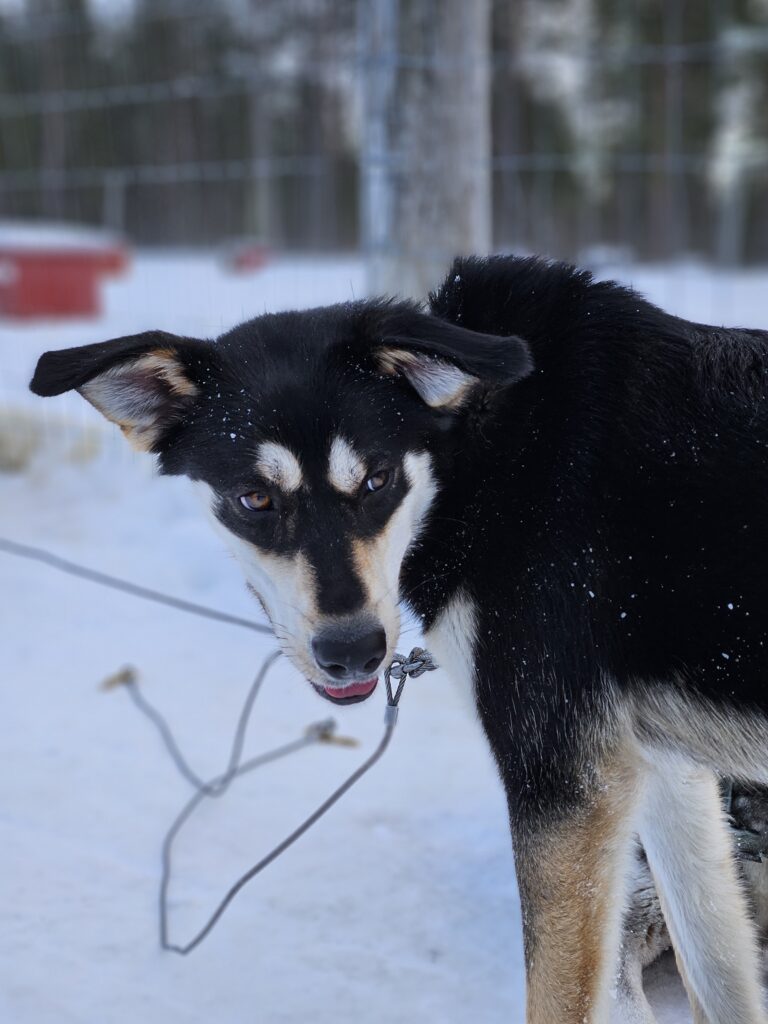
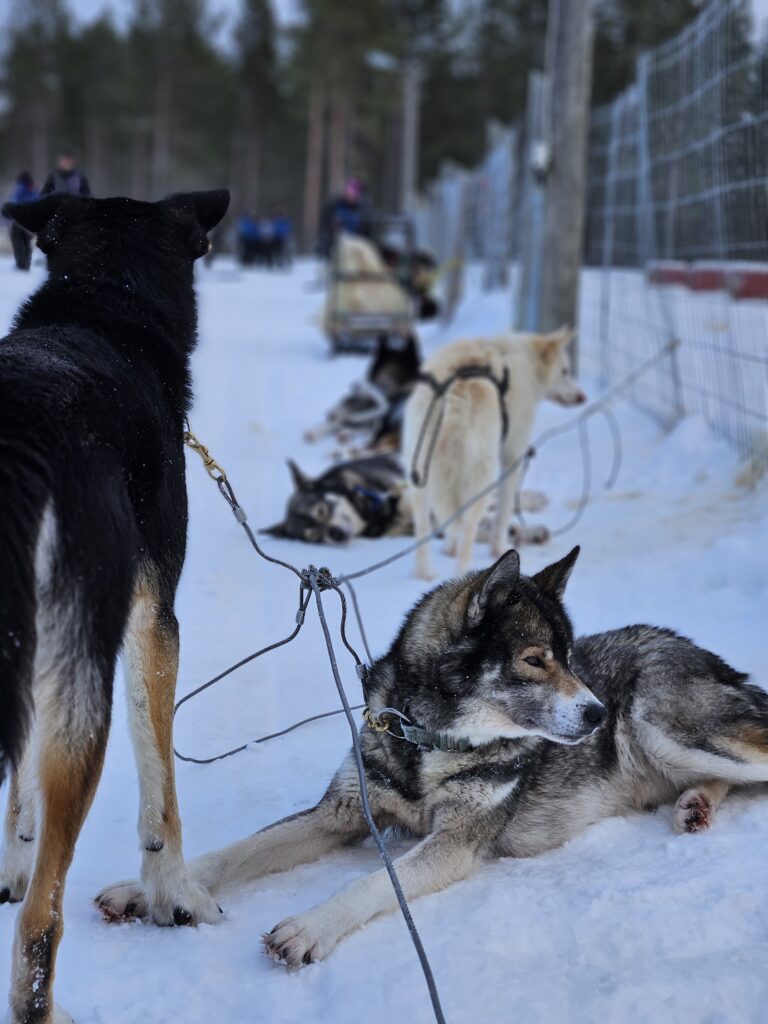
And earlier this year when I went dog sledding in Finland, the dogs they use are Alaskan Huskies as well!
2 thoughts on “Arctic dogs, husky dogs and sled dogs – what’s the difference?”
Great blog Debbie. Did you read much about the Huskies double-coat?
Thanks, Claire! I did come across that, and how their happy resting place is curled up, with the snow piling up on them to make their own personal igloo!
Comments are closed.