
The Origin of Dog Sledding
I never knew that sled dogs have been around for nearly 10,000 years!
In 2017, on Zhokhov Island in the Eastern Siberian Sea, archaeologists discovered the remains of a domesticated dog which had DNA links to today’s sled dogs. The common ancestry between modern sled dogs and this 9,500 year old Zhokhov dog provides evidence that humans have been breeding dogs since that time. Moreover, the fact that sled artefacts were also present at the same site points to earliest existence of what is becoming known as dog-sled technology.
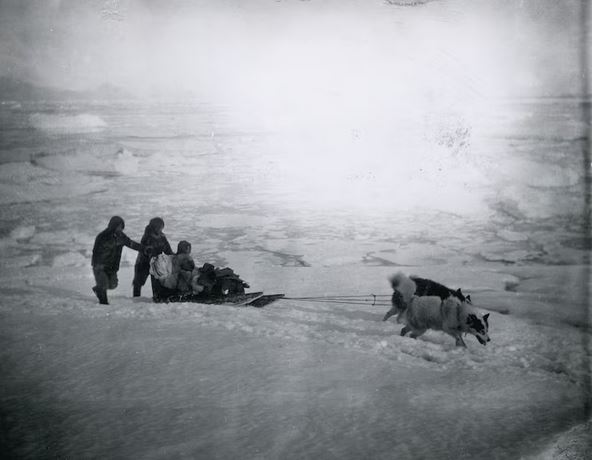
Eventually, over a period of many centuries, dog sledding spread right across the Arctic regions, with evidence of it appearing Alaska, Canada, Greenland and Scandinavia, as well as across Russia. Archaeological excavations have revealed that Inuit and Yup’ik cultures employed dog sledding in Alaska as a means of transportation as early as 1000 CE.
Much later, in the 17th century, when the French started to colonize Canada, they were among the first Europeans to adopt the practice of dog sledding and it was from the French that we have the word ’mushing’. It comes from the French word ‘marche!’ meaning ‘walk!’. Over time it turned into ‘mush!’.
In time, dog sledding would be adopted by many… and not just in the Arctic regions. The Norwegian explorer, Roald Amundsen credited the success of his 1911 expedition to reach the South Pole to his use of sled dogs.
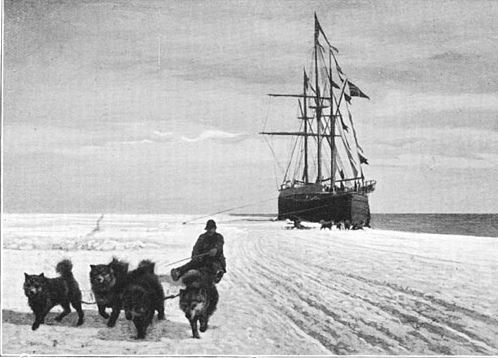
Now, however, with the use of planes and snow mobiles as more efficient means of transportation, dog sledding has been relegated predominantly to a sporting past-time.
The fact that dog sledding has become so popular with competitors and tourists alike, is a great thing, though. After reading about the history of the Iditarod Dog Sled Race I realised that the whole practice of dog sledding was at risk of becoming one of those skills to which we referred after first saying ”remember when…?”
There are some who hold the view that using dogs for sledding is cruel. Further, that dog sled racing not only perpetuates the cruelty but capitalises on it. Like many points of view involving animals there are many angles from which to take a stance. For example, does it make a difference that sled dogs have been bred for it – for centuries? Or, do the dogs really truly like running and pulling? Are we doing enough to protect the dogs when they are racing? Should racing be banned altogether? Can we draw a parallel with other working animals, e.g. horses? And if we do, does this make a difference anyway? Is dog-sledding a practice best relegated to history and not worth preserving?
Of course, every person is entitled to have their own view. And by going on this trip, I will have an opportunity to witness first hand (or should I say, second hand?) what it’s like to dog sled race, especially when we visit some of the checkpoints and watch the teams arrive, get checked and move on. This, coupled with the written accounts of people who have both participated in, and volunteered on, the Iditarod, is certainly giving me some amazing insights.
I am learning so much from my reading!
I can’t wait for the adventure to begin!
Sources
-
Alaska mushing school website.
-
National Geographic; Humans and dogs have been sledding together for nearly 10,000 years.
-
National Geographic; 8 Pictures of Sled dogs from over a century ago.
-
Wikipedia – Sled Dog