
“The Cruelest Miles”
In 1925 an outbreak of Diptheria in Nome threatened the lives of the residents while at the same time gripping the nation with the ensuing race against time to get antitoxin to the town. To find out more about this extraordinary story, including the misconceptions about the roles of the sled dogs, Balto and Togo, I read the book. “The Cruelest Miles” by Gay Salisbury and Laney Salisbury.
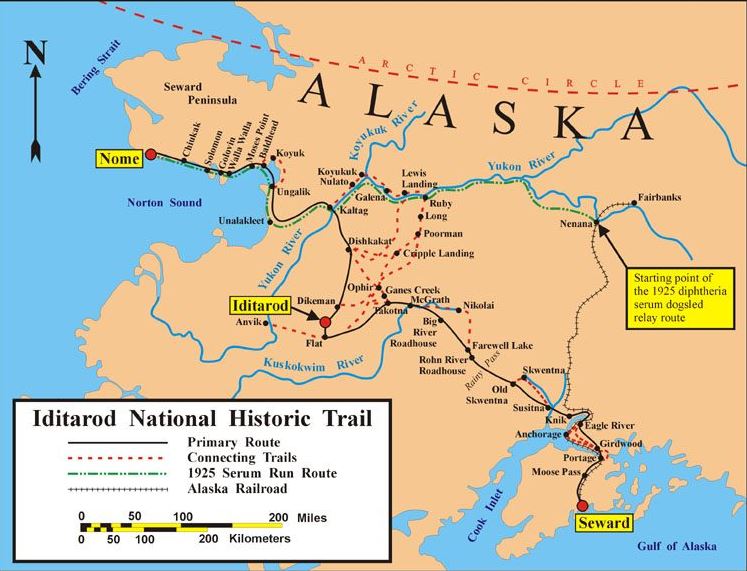
Some believe that the Iditarod Dog Sled Race is a reconstruction of the Serum Run. I have already explained that this is not the case. However it is true that part of the serum run is also part of the Iditarod trail. The following map shows where they overlap. You can see that the Iditarod Dog Sled race is much longer at 1,049 miles.
The book started by giving some historical context, describing how the gold rush of the late nineteenth century shaped Nome’s development. In the winter of 1898 hundreds of miners arrived in Nome to try their luck at prospecting. They were called “sourdoughs” because of the crocks of yeast which they often clutched. In summer, when the Bering Sea ice had melted, there were further onslaughts of hopefuls; by the summer of 1900 there were more than 50 ships off the coast of Nome waiting to disembark thousands of would-be prospectors. Some of them arrived ashore and set up camp on the beach where they started mining.
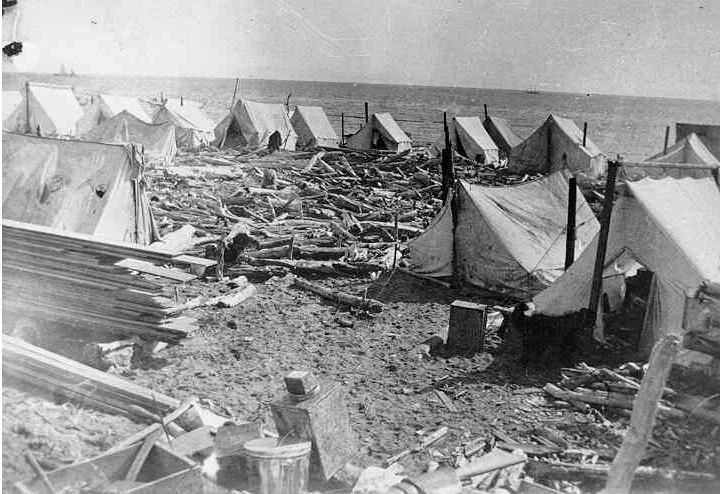
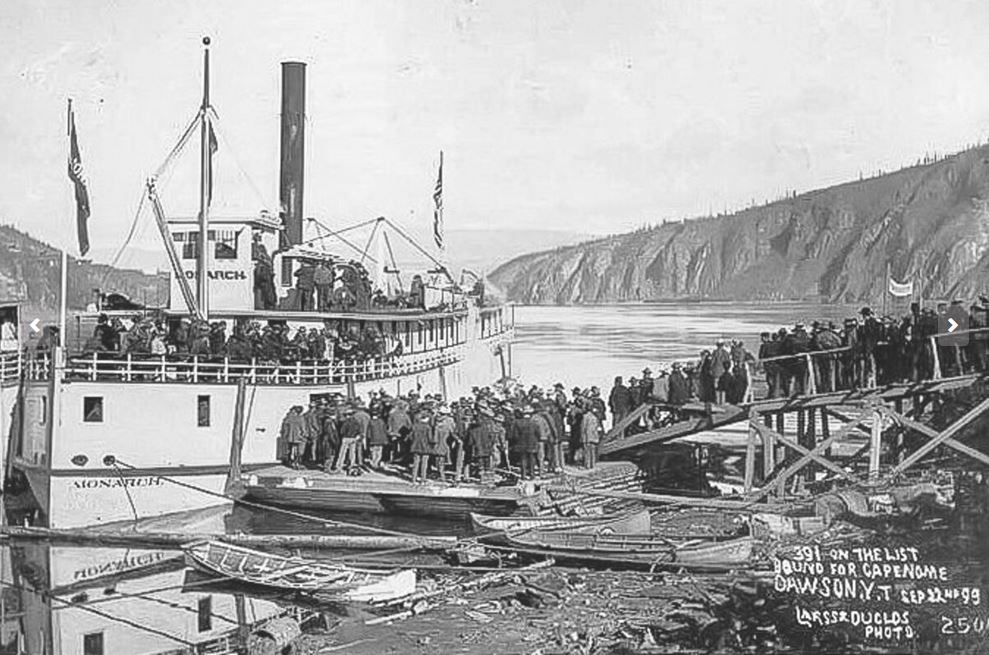
It is estimated that Nome’s population reached as high as 20,000 during this gold rush era.
The book contains the following description of life in Nome at the time:
“The town sat just 150 miles south of the Arctic Circle, and the sun stayed up for twenty hours and the drinking and brawling went on forever in the sixty-odd bars that sprung up. Player pianos were kept oiled, the dancehall girls charged a dollar a twirl to shuffle across roughhewn boards, and there was enough money and time to go around forever – or so it seemed.” P17.
Nome was a real frontier town. It was difficult to get to and isolated for most of the year. During winter the transportation options were few, with sled dogs being the reliable choice (only choice?), when the frozen Bering Sea meant that ships couldn’t reach the town.
“Teams were drafted into service as mail trucks, ambulances, freight trains, and long-distance taxis. The demand for sled dogs was so high, particularly during the northern gold rushes, that the supply of dogs ran out and a black market for the animals sprang up in the states. Any dog that looked as if it could pull a sled or carry a saddlebag – whether or not it was suited to withstand the cold – was kidnapped and sold in the north. “It was said at the time that no dog larger than a spaniel was considered safe on the streets” of West Coast port towns, said one sled dog historian.”
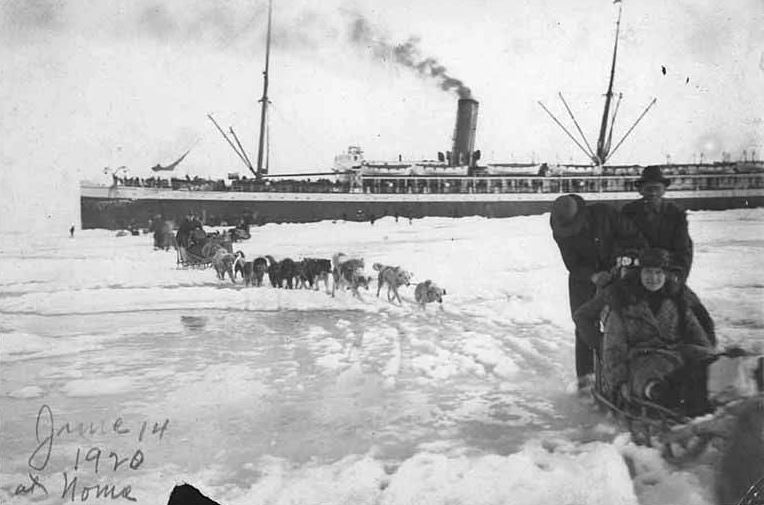
By 1909 when the gold rush had finished, the population dropped back to 2,600.
And by 1920 it had shrunk to around 820 people
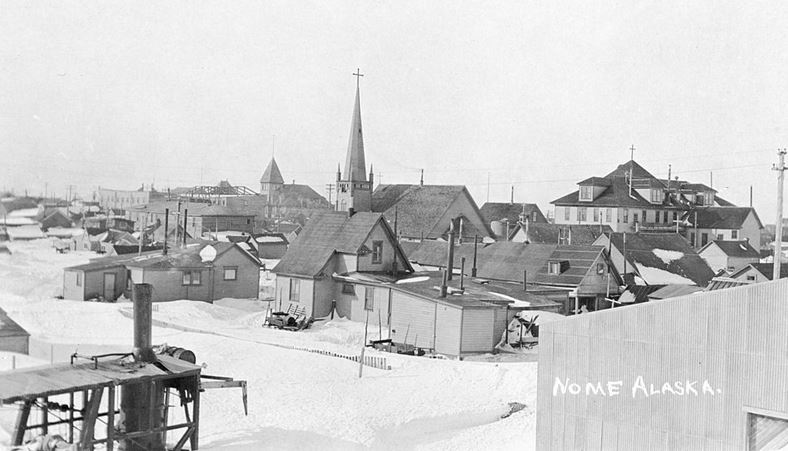
The very first words in the book – in the prologue – are a quote from the Nome Chronicle:
“We are prisoners in a jail of ice and snow. The last boat may be justifiably considered to have gone and this little community is left to its own resources, alone with the storms, alone with the darkness and chill of the North”
In 1925 when the Alameda had sailed from Nome, it had just delivered supplies for the winter. Critically, however, the diphtheria antitoxin which had been ordered was not delivered, and this was the last ship until the following spring.
At roughly the same time as the ship was leaving a young Eskimo child had taken ill in a village nearby and died the following day. As the number of sick children increased, it wasn’t long before Dr Curis Welch realised that he had a diphtheria epidemic on his hands.
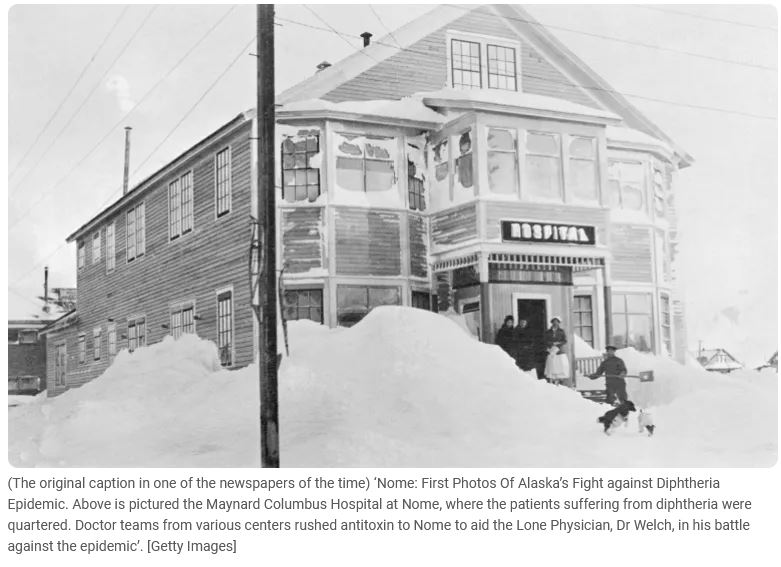
The town council was called together and a lockdown was enforced. Dr Welch was the only doctor for hundreds of miles. And one of his nurses, Emily Morgan, who had served on the Western Front in France, was appointed Quarantine Nurse. Between the two of them they attended the growing number of sick and dying children.
It would be weeks before a sizable shipment of antitoxin would reach Nome by sea. Aircraft had not yet achieved the advancement and reliability to manage the journey.
And the train only went part way.
In the meantime a smaller shipment of serum had been found which could be transported to Nenana by train. From there, the only solution was to organise a relay of dog sled teams to take the serum the remaining 674 miles from Nenana to Nome.
The description of the relay is gripping. Each leg of the journey is described, with details of the mushers, their teams, the logistics and of course the challenges of their plight, not the least of which was to ensure that the serum didn’t freeze!
It took only five and a half days for the serum to be transported from Nenana to Nome!
The most famous of the riders was Leonhard Seppala, with his lead dog Togo. It was Seppala who made the longest journey, when counting the miles covered to get to the start of his leg of the journey, as well as his part of the relay journey.
The story of Togo’s life and Seppala’s initial reluctance to train Togo as sled dog is absolutely delightful. It seemed that Togo had been watching the other dogs go out, and he was determined to be part of the team as well! As we know, he eventually got his chance. And that was the start of what was to become a partnership with Seppala which was extraordinary. The book contains descriptions of the amazing feats of their bravery and teamwork during the run.
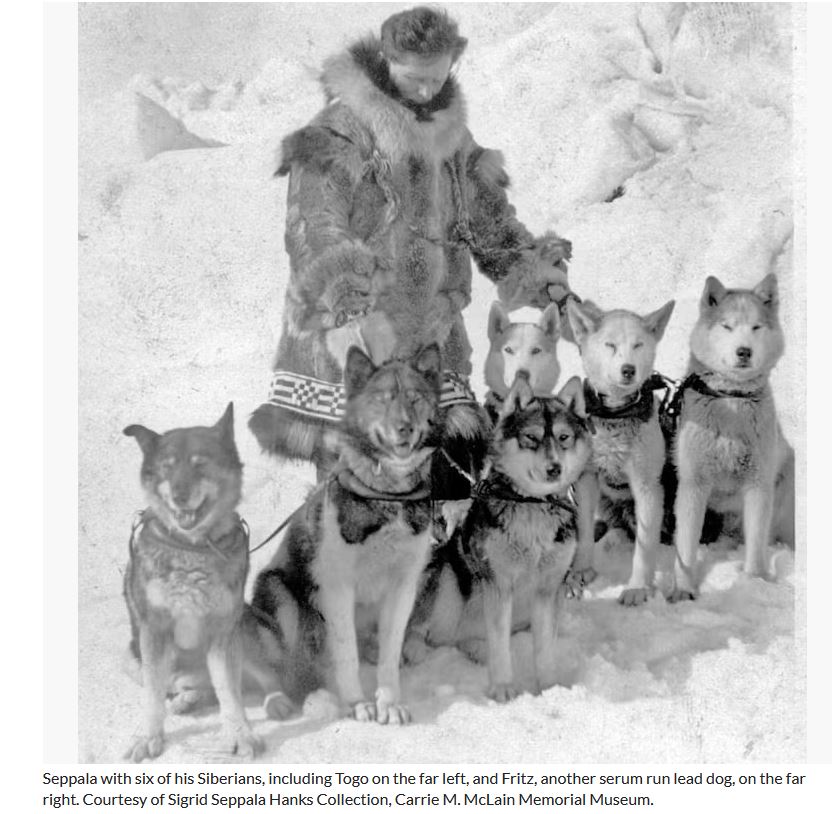
In one part, when Seppala decided to make the treacherous run across the frozen Norton Sound, the ice broke, and despite a desperate dash to shore, a channel of water opened up. The whole team was stranded on an ice floe. What happened next was remarkable, and you really need to read the account in the book to experience the full gripping tale. (pp209+) Basically, when they drifted close enough to the shore ice, Seppala threw Togo (who was still harnessed) across the water. Togo understood what he needed to do, and started tugging on the line, to try and coax the ice floe closer to the shore. But the line snapped! “As Seppala stood staring across the lead at Togo, the dog dove into the water, snapped the line up into his mouth, and struggled back out onto the jammed-up floe. Holding the line tightly in his jaws, Togo rolled over the line “until it was twice looped about his shoulders” and began to pull. The floe started to move and Togo continued to pull until it was close enough for Seppala and his teammates to jump safely across”
Animal psychologists call this ability to find solutions, “adaptive intelligence”. In all the reading which I have done for this trip I have come across many examples of this, when lead dogs have guided the musher and their teams out of dangerous and deadly situations, sometimes contrary to the mushers’ instructions.
It is truly extraordinary.
It was Gunnar Kaasen who made the final run to Nome, with his lead dog Balto, when Kaasen didn’t wake up Ed Rohn, the musher who was due to ride the last leg from Port Safety to Nome. Rohn had incorrectly assumed that Kaasen would wait out the blizzard at Solomon before continuing, and so had gone to bed. Realising that it would waste precious time to wake up Rohn and get the sled dog team ready, Kaasen decided to push on.
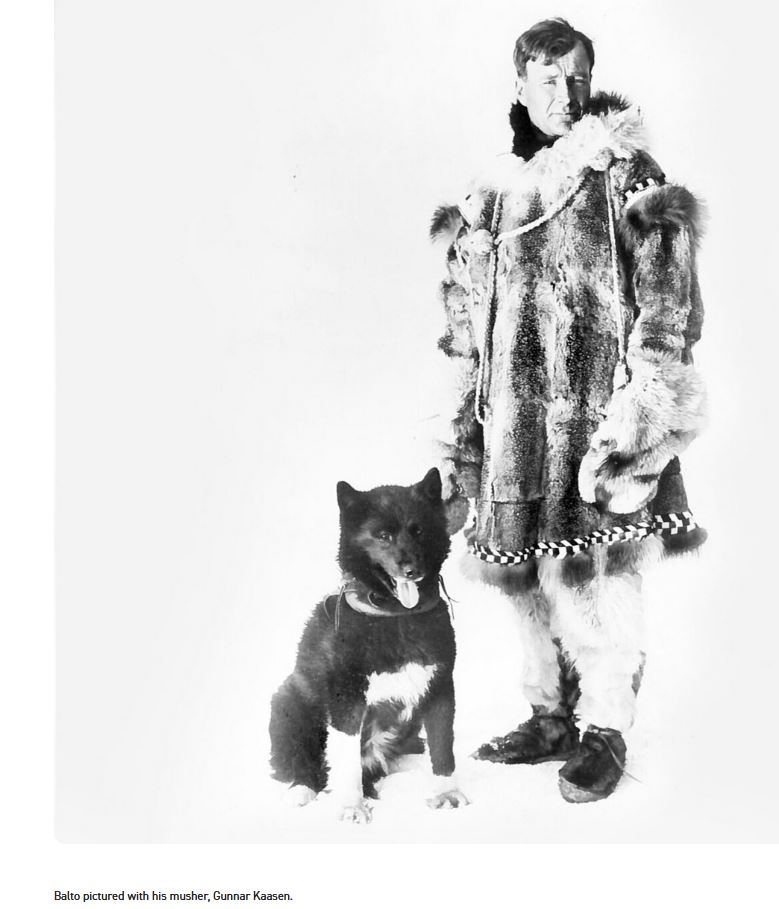
The descriptions in the book about Kaasen’s experience in the blizzard, together with quotes from other mushers (e.g. Scotty Allen during the All Alaska Sweepstakes races between 1909 and 1911) make frightening reading.
Scotty Allen is quoted as saying, when confronting a blizzard; “you don’t know whether to pray, curse or cry. You generally do all three together”. P220. “The din deafened me. I couldn’t hear, couldn’t see, couldn’t breathe. I felt as if the dogs and I were fighting all the devilish elements in the universe” p221
The book goes on… “A blizzard attacks a musher by causing confusion. His eyelids freeze shut, his face is pounded by snowy blasts every way he turns, and he loses his sense of direction.”
And so it was Kaasen and Balto who achieved the most notoriety from the press, as the story broke to the world.
There continues to be contention around this. According to the American Kennel Club, “While the lead dog of the 53-mile final leg, Balto, would become famous for his role in the run, many argue that it was Seppala and his Siberian Husky lead dog, Togo, who were the true saviors of the day. All told, the 12-year-old Togo and Seppala traversed an astounding 264 miles, compared to an average of 31 miles each for the other teams.”
After the race, Kaasen and Balto became so famous that a statue of Balto was erected in Central Park in New York, and a Disney movie was made. Some of the stories of dog bravery on the trail were actually Togo’s even though they were attributed to Balto. There was even some talk that Balto wasn’t even the leader of Kaasen’s dog team; it was one of his other dogs, Fox.
Sadly, however, Kaasen’s dog team didn’t fare well thereafter. The dogs were left behind with the promotor when Kaasen returned to Alaska. They were the star of several vaudeville acts, and eventually ended up in a sideshow in Los Angeles, neglected and abused.
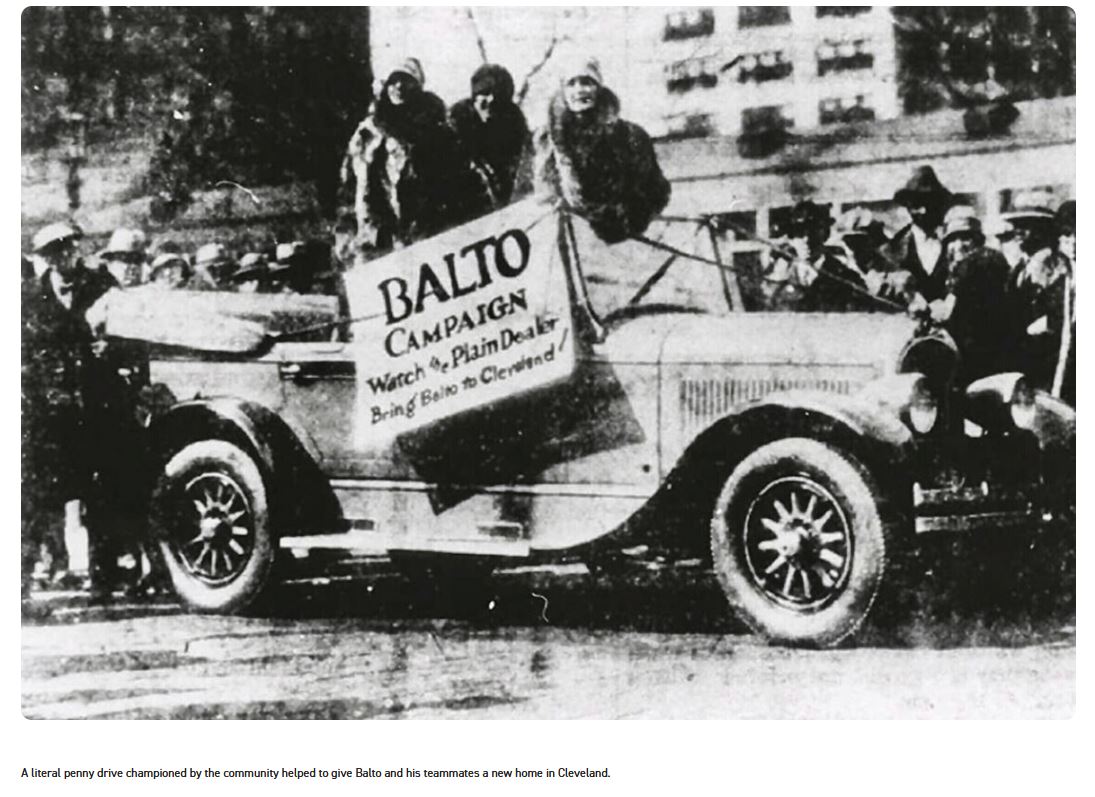
A Cleveland businessman rescued seven of the team in 1927 (the remainder had died or already been sold). They received a hero’s welcome by the city as they marched to their new home – the Metroparks Zoo.
On the other hand, Seppala was determined to educate the world about Togo’s remarkable achievements, and about his amazing team of Siberian sled dogs. In 1926 Seppala embarked on tour himself, taking his Siberian dogs with him to make promotional appearances from Seattle to California. At the end of the tour Seppala and the dog team were in New York, where Seppala drove the team around the ice hockey rink. At one game Roald Amundsen presented Togo with a medal. It was a fitting end to the tour, and represented the start of a period of dog sledding racing for Seppala and his Siberians.
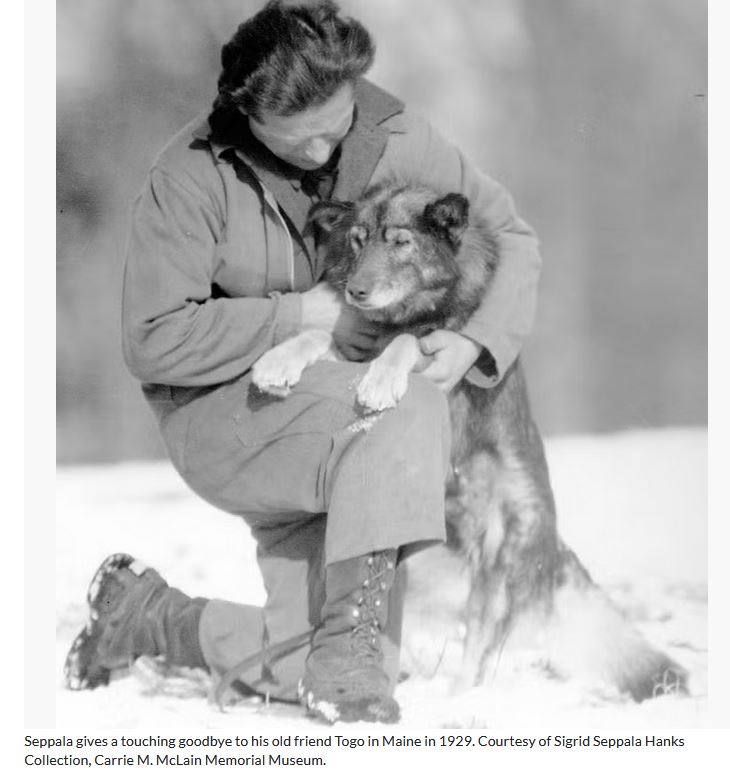
Eventually, Togo retired, and then died in 1929 at the age of 16. The New York Times Magazine wrote in a eulogy: “Every once in a while a dog breaks through the daily routine of feeding and barking and tugging at a leash, and for some deed of super-canine heroism wins the adoring regard of every one who hears of him. His was the kind of life that catches men by the throat and sets them to hero worship.” (p252)
I will finish my post with this quote, which brought tears to my eyes.
“Years after Togo’s death, Seppala kept the dog’s spirit alive. One reporter, writing about Seppala many years later, said that “in the depths of his keen gray eyes – lives a dog who will never leave” “ p252
Sources
-
Smithsonian National Postal Museum. “As Precious as Gold”
-
Mining News North. “Dust on the Beach at Nome creates Rush”
-
Cleveland Museum of Natural History “A race to save lives”
-
American Kennel Club. “The True Story of Togo: Siberian Husky Sled Dog Hero of 1925 Nome Serum Run” This is a great article, which also references “The Cruelist Miles”
-
Iditarod Official Website: “Eye on the Trail: Serum Run Stories – Who was Leonhard Seppala?”
-
Newspapers.com. An Ancestry.com website. “First Photos of Nome Dash…”