
Native Alaskan History and Cultures
Archaeologists believe that humans crossed from Siberia to America via the Bering Land Bridge at various times between 40,000 and 13,000 years ago. These groups lived a subsistence lifestyle by hunting and trapping the Ice Age animals which populated the area; woolly mammoths, musk oxen, giant bison, saber-tooth cats.
Later groups included the ancestors of two prominent current day cultures- the Athabascan Indians and the Eskimos – who waged wars against each other for generations before European contact. These conflicts were mostly over resources, women and territory and took the form of surprise raids and skirmishes, rather than all-out war. This time of warring occurred between CE 1300 and CE 1800 and is often referred to as the Bow-and-arrow Wars.
As with most of my posts, I have spent hours on the internet, trawling through websites and resources, going down ‘rabbit holes’ of fascinating leads, and then trying to distil the enormous amount of information into a content format which suits my objective; namely some information bites to which I can refer to refresh my memory on the topic I am researching. And if someone else is reading this, then hopefully it suits their goal as well. I have glanced at complex essays which made my eyes glaze over, and read material published by information hubs with a range of agendas. My favourite sources for this post have been native Alaskan sites, sometimes comprising groups of elders. Also museum resources and government initiatives. Plus essays written by academics who are passionate about their area of expertise. And of course I have drawn from the books I have already read. Naturally, in the process, I am leaving out great swathes of information, and summarising to such an extent that it would make historians giddy with disapproval. Nevertheless, I emerge with new knowledge, which I know will improve my holiday experience immensely.
So, without further ado, I will share what I have gleaned….
Native Alaskan peoples are divided into the following groups differentiated by their languages and cultures:
- Athabascans
- Yup’ik / Cup’ik
- Inupiaq
- Aleut / Alutiiq
- Southeastern tribes (Eyak, Tlingit, Haida and Tsimshian)
Below is an infographic published by the Bureau of Land Management, which I found to be the most easily digestible in terms of a brief visual of the groups and their regions.
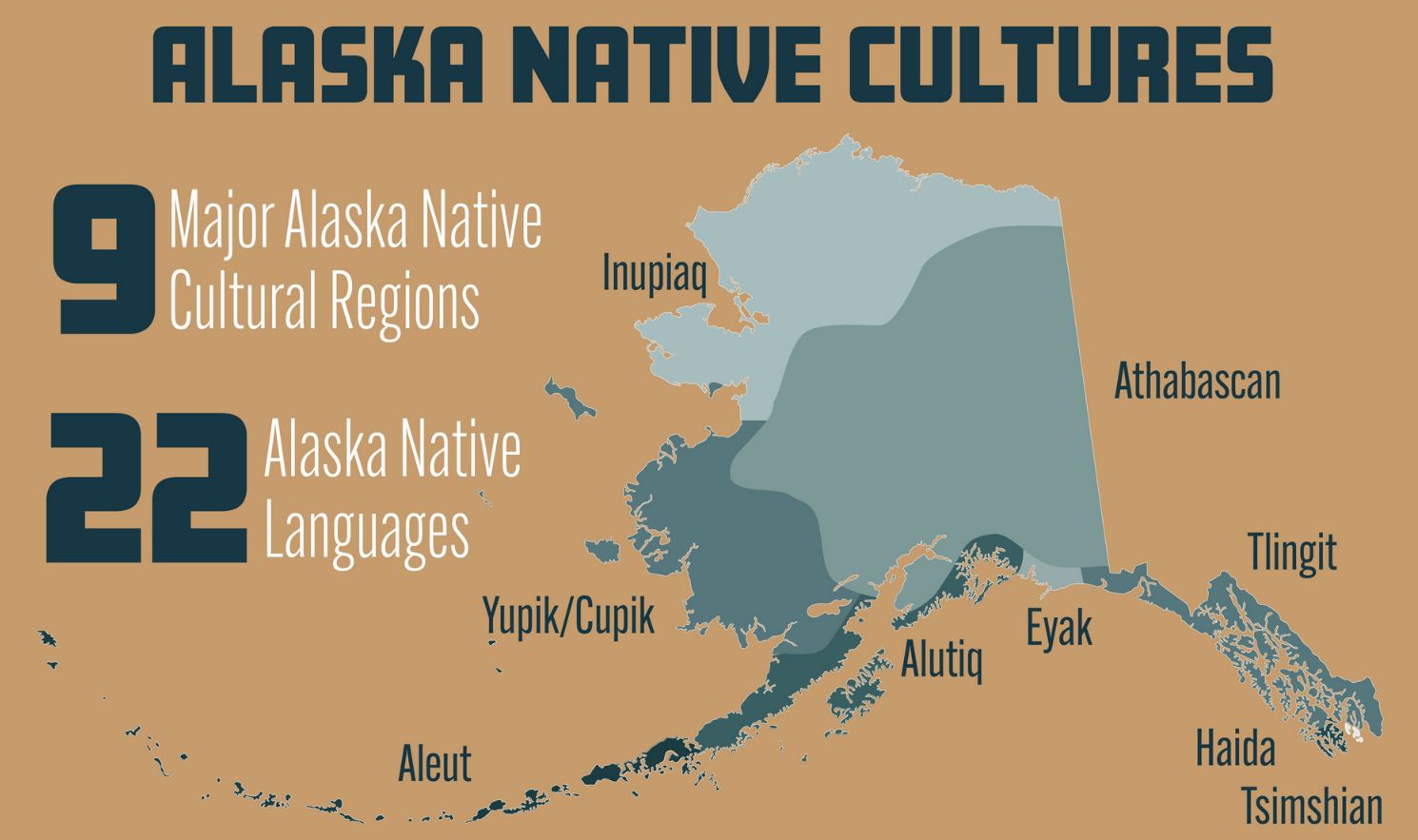
Athabascans
The Athabascan people lived in the interior of Alaska along the five major river systems: the Yukon, the Tanana, the Susitna, the Kuskokwim, and the Copper River drainages. They were nomadic – hunting, fishing and trapping in small community groups – and developed lucrative trading networks to support their subsistence life. They also call themselves Den’a which means “the people”. Anchorage is located within the traditional homelands of the Dena’ina Athabascan people, and many of the place names are taken from the Athabascan language, Denali being an obvious one.
In most of the Athabascan groups children stay in the mother’s clan – a matrilineal system, in which a woman and her brother often made up the central unit.Potlatches were traditional gatherings for social and religious purposes, for celebrating and for mourning, for competition and for keeping the peace.
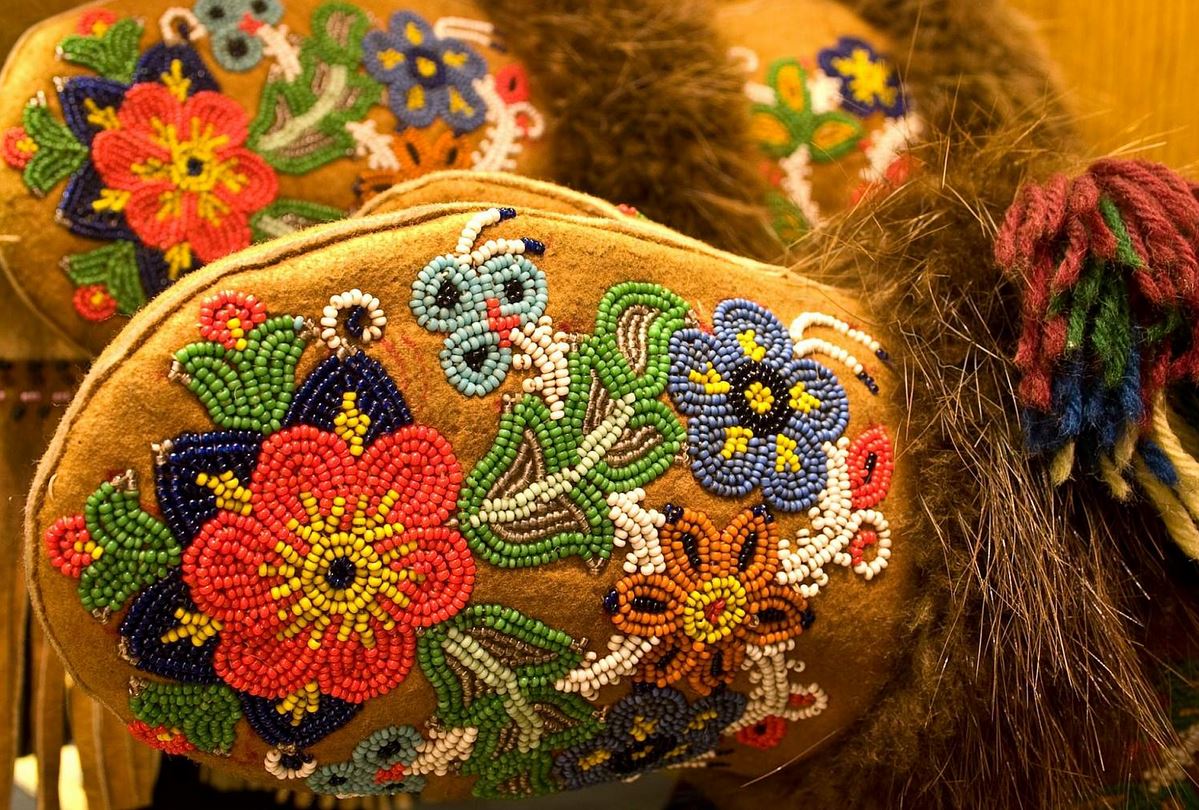
Athabascans are known for their exquisite beadwork, incorporating seeds, glass beads and historically porcupine quills. The tradition is passed down through the women of the family, creating a special connection between generations and a shared cultural identity.
Yup’ik (YOO-pik) and Cup’ik (COO-pik)
The Yup’ik are the largest group of indigenous Alaskans, and, with their linguistic Cup’ik relatives, live in the western and southwestern area of Alaska, where they have been for at least 10,000 years.
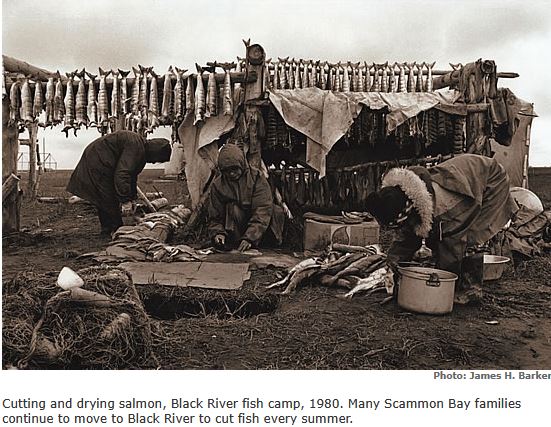
The Yup’ik are semi-nomadic; hunting, fishing and gathering during the warmer seasons of Spring to Fall, then remaining settled during the winter.
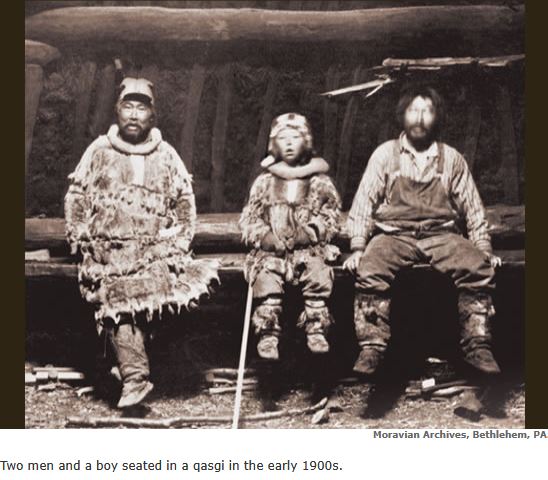
Their homes were made of wood and sometimes built underground for protection against the cold. The men and women lived separately; the men’s house was called a qasgiq (kuz-gi), while the women and children lived in an ena (inna).
The role of shamans in the communities was one of healer and leader. Early in life they were chosen by the animal spirits and given special powers to enable them to interact with the spirits.
Yup’ik people are known for their mask carving, elaborate dances and finely woven grass baskets.
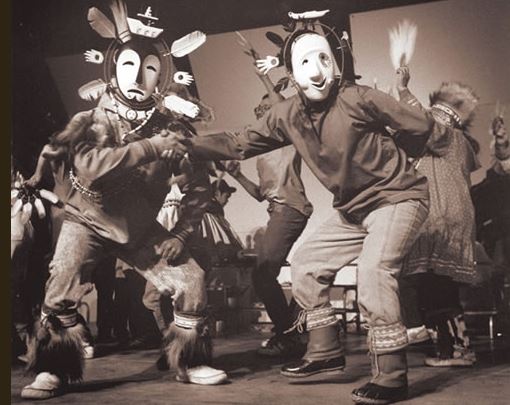
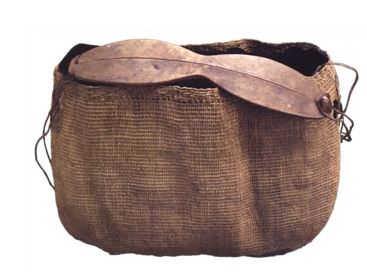
This is a great website to explore further about the life of Yup’ik people, then and now.
Inupiat (in-YOO-pee-at)
(Inupiaq is the language, plus the singular version of Inupiat)
The Inupiat people live in the Arctic regions of Alaska and, like other native Alaskan groups, rely on hunting, fishing and gathering plants and berries. However, while the Yup’ik people tend to be more nomadic, the Inupiat people are more settled, travelling between temporary camps for better hunting grounds during the various seasons. In practice their lives are heavily influenced by the whale, walrus, seal, polar bear, caribou and fish populations.
Like other Arctic groups across the Arctic regions of Russia, Canada and Greenland (to which the Alaskan Inupiat are related) most of the Inupiat communities can only be reached by air, and occasionally by boat as there are no roads.
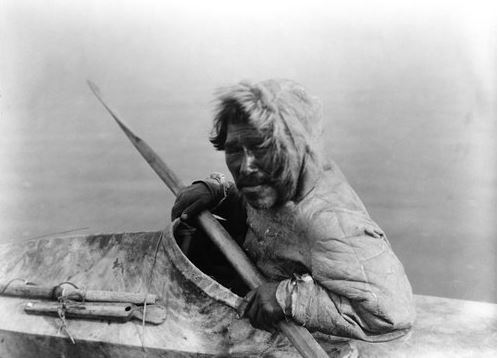
Both the Yup’ik and Inupiat people use umiaqs, which are large, open skin boats. They were mostly used for transportation, while the smaller kayaks were used for hunting and fishing.
Curiously, I just realised that the ship I was on last year, travelling up the west coast of Greenland, was owned by the Arctic Umiaq Line… I can categorically state that our ship was not an open boat made of skin!
The Inupiat are known for their complex ivory carving, a tradition which goes back thousands of years.
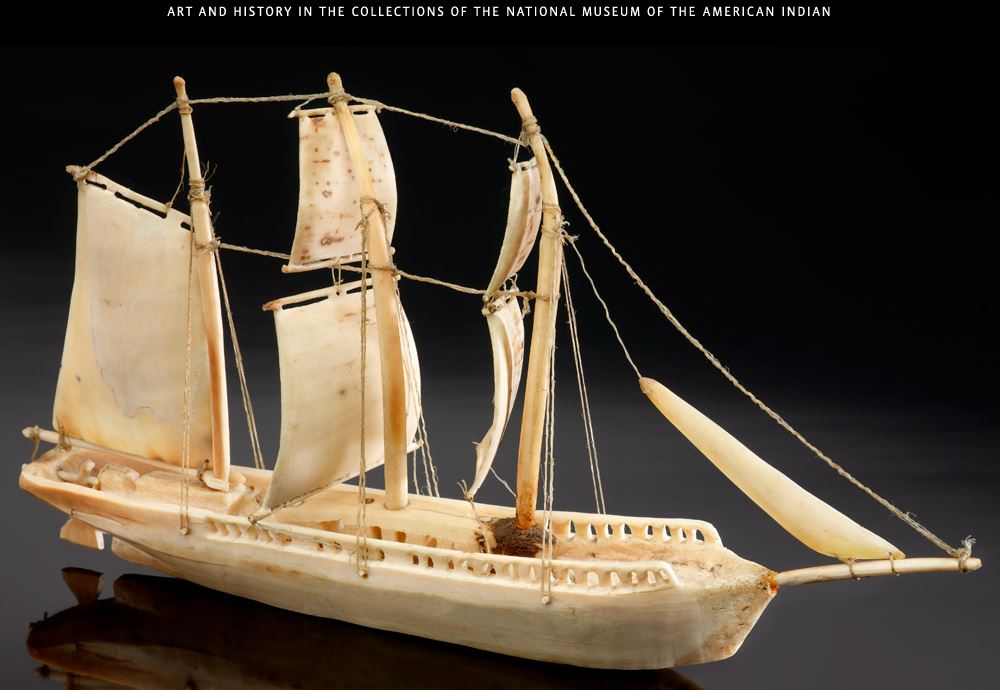
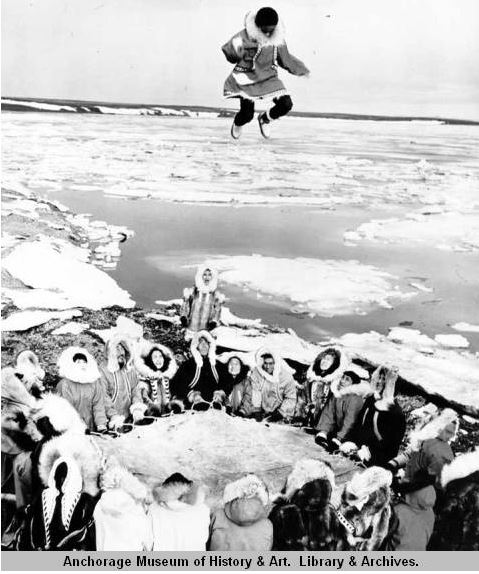
Each year the Inupiat people hold a whaling festival to appease the spirits of the whales hunted and killed during the season. The blanket toss, while originally to enable the hunter to see across the horizon, is now done for entertainment.
Aleut (al-ee-oot) and Alutiiq
The Aleut and Alutiiq peoples are from the south and southwest region of Alaska where, as is obvious from the map, the sea defines their existence.
The Aleut are also referred to as Unangax (Oo-nun-gahx), while the Alutiiq people also known as Sugpiaq (sooq-pyack).
Like other Alaskan native peoples the Alutiiq and Aleut peoples were semi nomadic with different camps or villages occupied at different times of the year depending on the hunting and harvesting seasons.
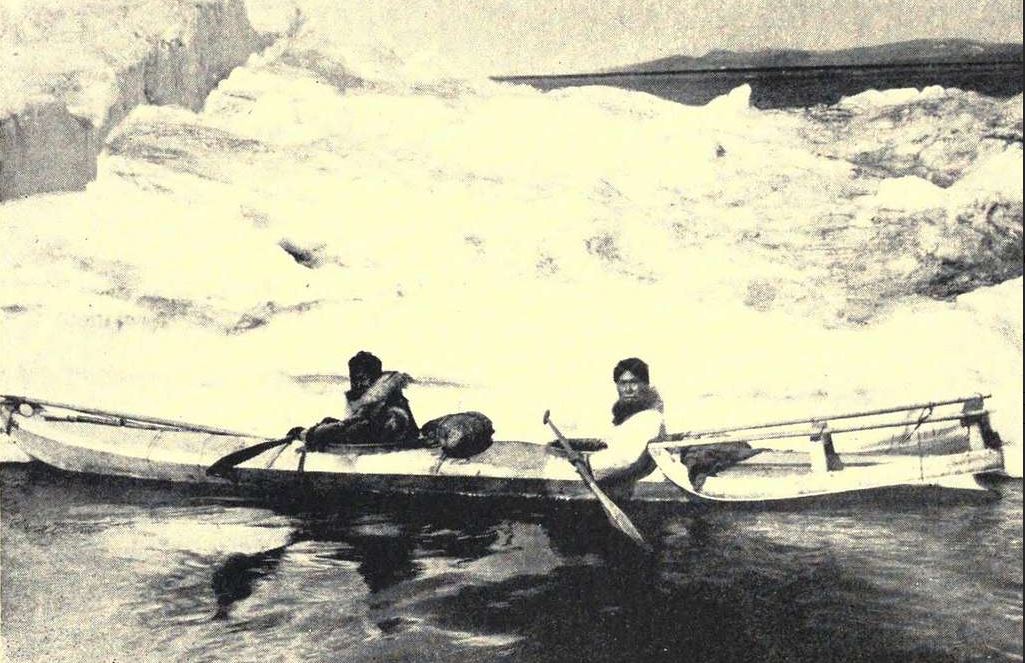
They used one or two person kayaks called baidarkas, which can be differentiated from the Inupiat kayaks by having a more rounded hull as opposed to the sleeker kayak. The baidarka was also often longer, with more than one cockpit. Interestingly, the word baidarka comes from the Russian word for “little boat”.
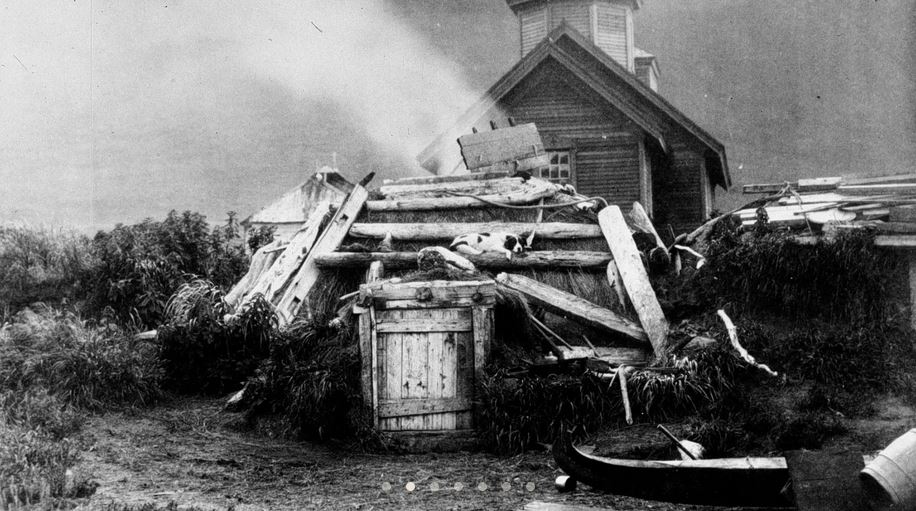
I discovered a website which provided an amazing chronicle of Alutiiq history, together with stories and information about many of the Alutiiq villages in the Kodiak region, both then and now. The picture on the left is of Kal’ut (Karluk) and shows the coexistence of native and Russian cultures.
The arrival of the Russian ships in Alaska in the 18th century had a profound impact on the native peoples, particularly when the Russians began exploiting the people (for labour) and land (for resources, including hunting spoils). This was often accompanied by violence; an example of which was the Awa’uq massacre, when the Russians opened fire on people hiding on a rocky outcrop called the Refuge Rock.
People were forced to work for the Russians, often resulting in starvation when they were taken away from their normal hunting and harvesting activities. There were also reports of slavery.
While hunting and trapping was the initial objective for Russian colonisation, there followed a period of Christianisation. With the arrival of Russian priests there was some tempering of the treatment of the Alutiiq people when the priests disagreed with the company’s harsh approach to the native population. Orthodoxy spread rapidly as a safety mechanism because baptised people were considered Russian and so could not be enslaved. On the other hand, this adoption of Christianity meant that traditional spiritual practices such as shamanism, declined.
Dehrich Chya, Language and Living Culture Manager at the Alutiiq Museum, who authored and delivered the Alutiiq presentation from where I gathered most of this information, believed that there was one positive outcome of this period, although perhaps not a silver lining inasmuch as one opportunity for further subjugation which the Russians did not enforce. This was in relation to language. Chya points out that the Alutiiqs were not forced to speak Russian, and for this reason there are still people today who speak Alutiiq. For a fascinating and comprehensive account of this period there are recorded presentations here.
As I have researched each of the native Alaskan groups I have tried to include a cultural tradition or distinctive artform practiced by the group. The visors and hats created by the Aleut people are quite distinctive, and have a fascinating history and significance. The hats were traditionally made out of driftwood (due to the lack of trees), and were painted and decorated for significant meaning, including embellishments of walrus ivory and sea lion whiskers. Originally designed to be worn by the men hunting at sea, it shielded their eyes from the sun, and provided a spiritual connection to the sea and to the mammals.
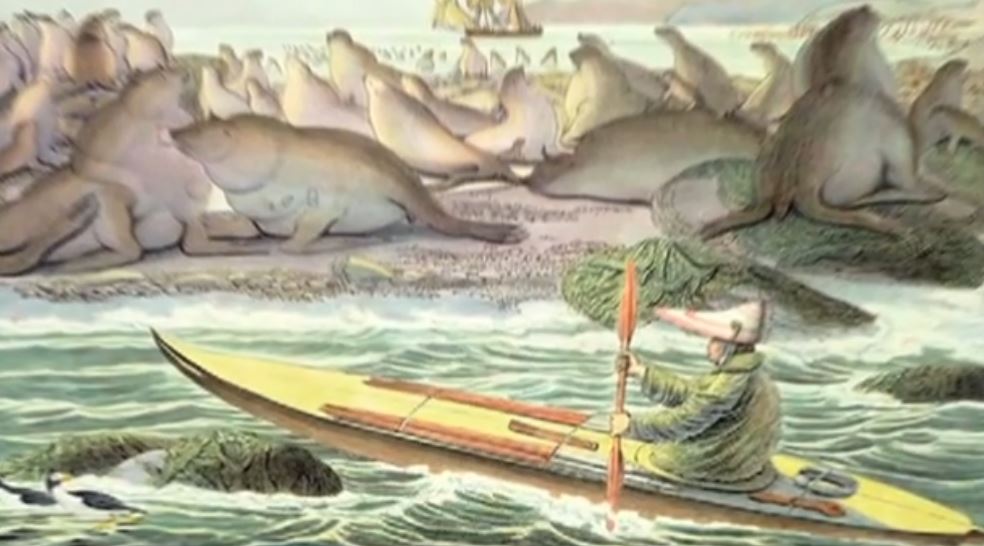
The length of the visor signified the relative importance of the wearer, with younger men wearing short visors, and the most elaborate and large hat being reserved for the chief.
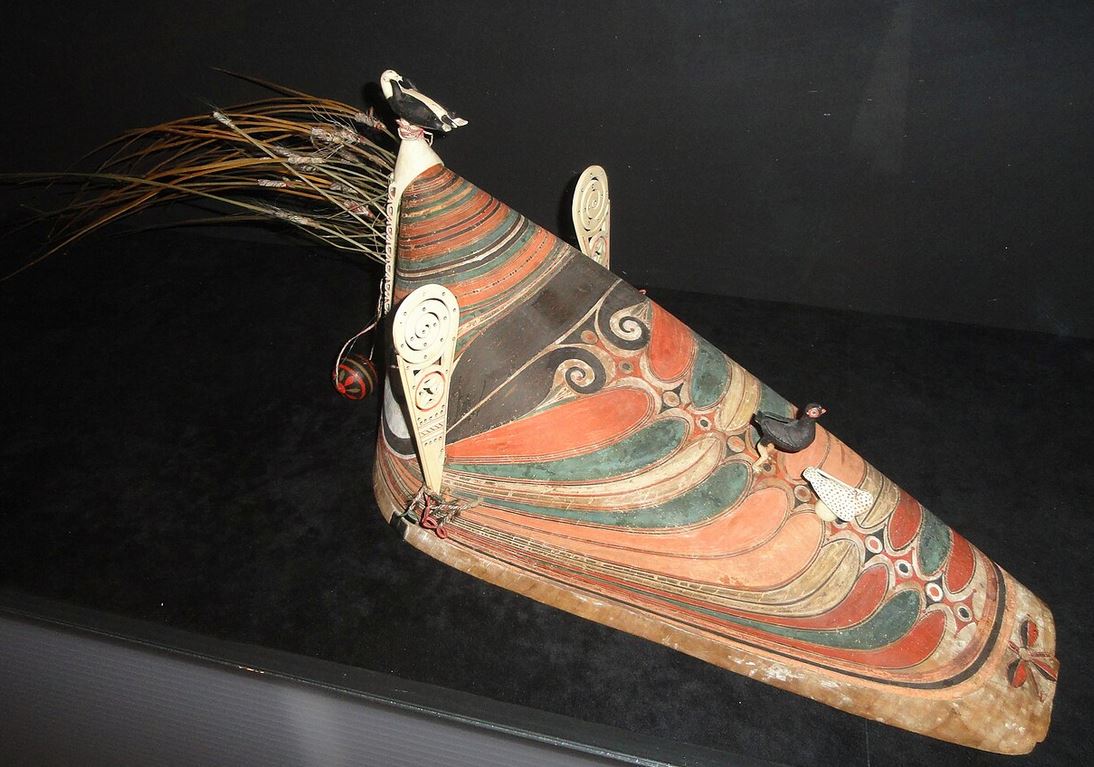
Southeastern tribes (Eyak (EE-yak), Tlingit (KLINK-it, Haida (HIGH-duh) and Tsimshian (SIM-shee-ann))
Each of these native Alaskan groups has societies which are structured as moieties. For the Tlingit, Haida and Eyak groups, there are two moieties; the Raven (or Crow) and the Eagle (or Wolf). The Tsimshian people have four moieties; Raven, Wolf, Eagle and Killer Whale.
Members of the moieties (and their clan subgroups) use images as their crests. These can include animals, plants, places, celestial bodies and supernatural beings.
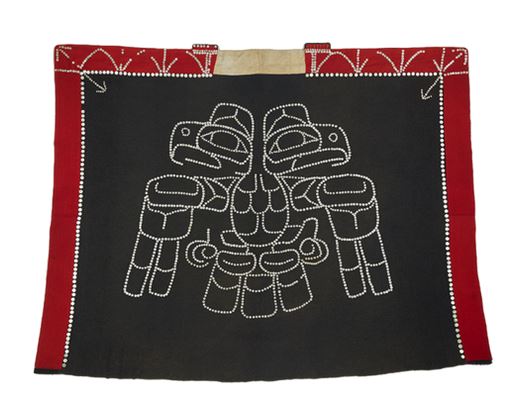
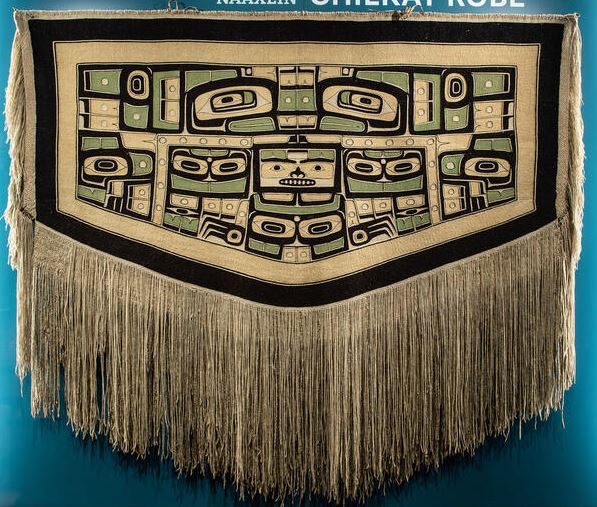
The Chilkat style of weaving is another visual representation of the intricate moiety designs. Used to make robes for ceremonies and dances, this style of weaving is a complex combination of bold designs representing spiritual connections and stories.
People are born into their moiety and marry outside their moiety, although the marriage restriction is not always followed today. And like the Athabascans, Southeastern native groups have a matrilineal system with the children remaining in the mother’s clan.
These southeastern groups are known for their skill in building totem poles, which were carved to honour family and clan ancestry, to record important events, and to otherwise tell stories. Generally a totem pole will include a carving of the main moiety, together with a clan animal, as well as other passive and aggressive animals on the clan crest. The carving may then go further to communicate a narrative.
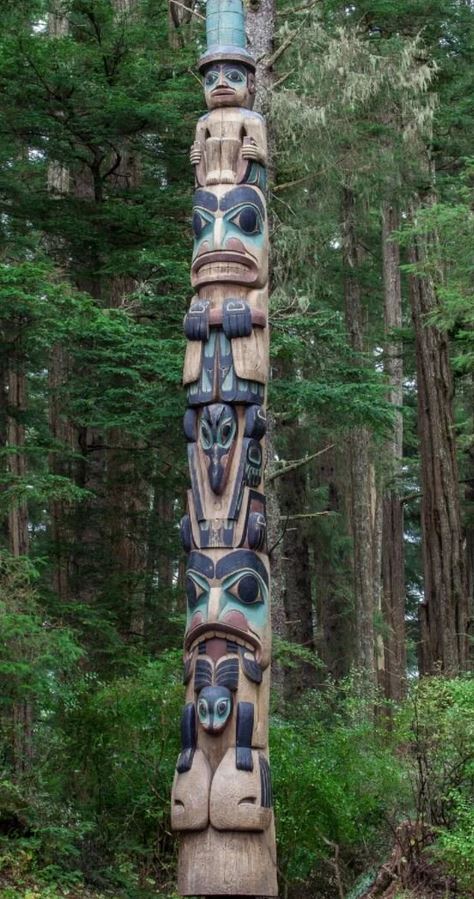
To conclude….
….perhaps navigate to this web page and scroll down to the Featured Video to watch a short presentation, produced by Travel Alaska, the official travel association for the state of Alaska, about the five Alaskan cultural groups.
Sources:
-
Library of Congress website; “Native Peoples”
-
National Park Service. “Bering Land Bridge National Preserve”
-
EBSCO. Alaska Natives
-
Bureau of Land Management. Alaska Native Tribes Infographic.
-
“The Cruelest Miles” Gay Salisbury and Laney Salisbury
-
Stanford Medicine Ethnogeriatrics website
-
Travel Alaska website; Athabascans
-
Anchorage Public Library website – resources
-
Alaska dept of labour and workforce development. Census results 2013
-
University of Mississippi website page “About the Inupiat”
-
Alutiiq Museum Archaeology Repository website. 20th Century Villages
-
American Museum of Natural History; Tlingit.
-
Alaska Wildlife Alliance. History and Significance of Totem Poles.
-
Anchorage Museum, The Calista Elders Council. The Way We Genuinely Live.
-
Smithsonian National Museum of Natural History. The Artistry and History of Aleutian Islands Bentwood Hats. (youtube)
-
Alaska.org. Athabascan Embroidery
-
National Museum of the American Indian. Infinity of Nations