Caribou
I realised that there was one more large animal of Alaska which I needed to include!
Caribou are a medium-sized member of the deer family and stand about 3.5 feet tall at the shoulder. Females (cows) can weigh up to 300 pounds, while large males (bulls) are about twice that size. Most caribou are medium-brown or grey, but coloration varies widely from nearly black to almost white. Their winter coat is somewhat lighter than their summer coat.
Caribou are the only deer species in which both males and females have antlers. Their antlers, which are shed every year, have a long, sweeping main beam up to five feet wide. Each side has one or two tines, or branches, and each tine may have several points. The larger racks of caribou bulls are considered trophies by big-game hunters.
Caribou have special adaptations that allow them to survive their harsh arctic environment. Long legs and broad, flat hooves help them walk on snow and on soft ground such as a peat bog. A dense woolly undercoat overlain by stiff, hollow guard hairs keeps them warm. Caribou dig for food using their large, sharp hooves.
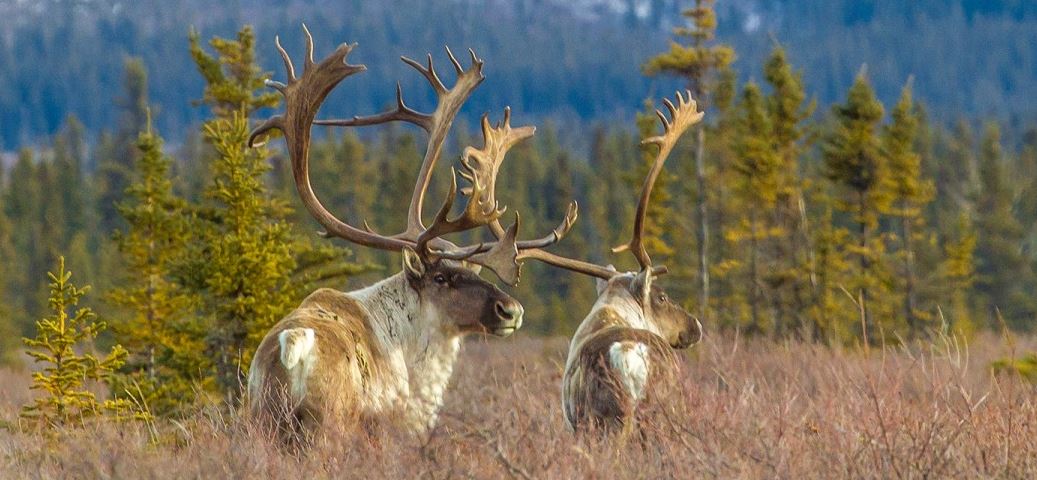
The average lifespan of an adult caribou is eight to ten years. They reach maturity at about three years. As with most deer species, male caribou fight each other for a harem of five to 40 cows. This sparring, called rutting, occurs in the fall. Injuries in this natural quest for dominance are rare, although occasionally the bulls’ antlers lock together and both animals die.
A single calf is born in the spring. Unlike most deer, caribou young do not have spots. They are able to walk within two hours of birth and are weaned gradually over several months. After calves are born, females with newborns gather into nursery bands and separate from the rest of the herd. Gradually, the bulls and barren cows rejoin the calving cows at the calving grounds. These larger groups of caribou offer some protection for the calves from predators such as wolves, bears and lynx.
Caribou feed on sedges, grasses, fungi, lichens, mosses, and the leaves and twigs of woody plants such as willows and birches.
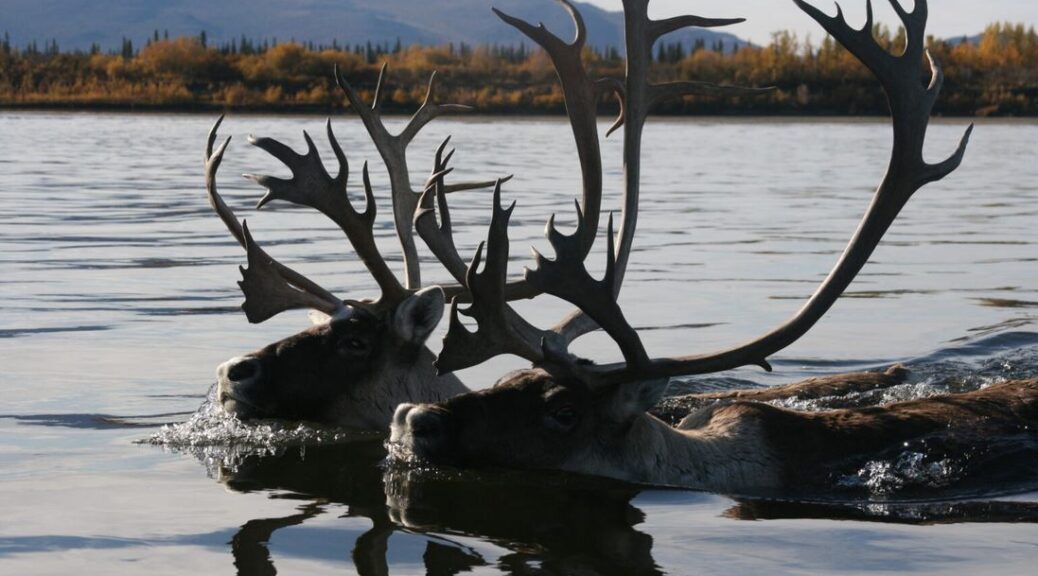
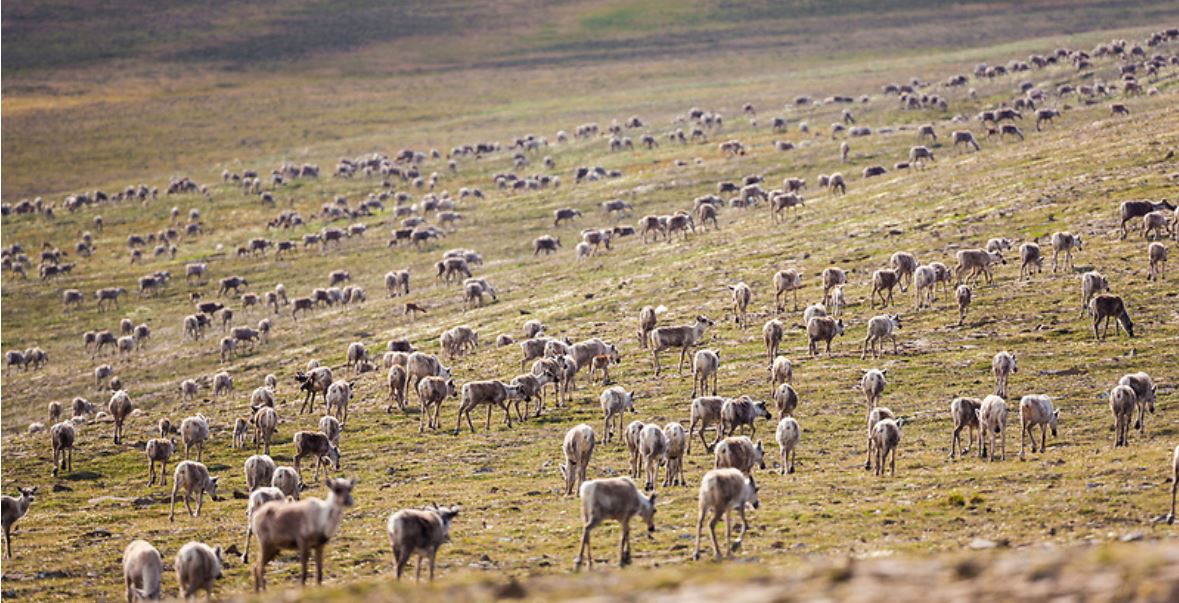
Although some herds stay on the cold tundra all year, most caribou have distinct summer and winter ranges. The large northern herds migrate over long distances, frequently crossing large, swift-running streams and rivers. Consequently, even caribou young are extremely strong swimmers.
Insect bites are a particular nuisance for caribou. When mosquitoes are numerous, a caribou may lose up to half a pint of blood a day. In coastal areas, they seek temporary relief by submerging themselves in water. Large aggregations of caribou may seek windy hilltops, dry, rocky slopes, or snowfields if they do not have access to a coastal area. Barren ground caribou have been known to stampede in attempts to escape the ravages of mosquitoes, warble flies or nostril flies.
Caribou were once essential to the survival and livelihood of native peoples of the Arctic. Natives used caribou meat, milk and organs for food. Hides provided material for clothing and shelter, and bones, antlers, and sinews were used to make tools, tableware, and handicrafts. However, though caribou remain a subsistence food resource, other uses have declined as native populations have become more technologically advanced.
Caribou is actually the same species as Reindeer. The difference is that they are called reindeer in Europe, but caribou in Alaska and Canada. According to the US National Park Service, however, all caribou are wild animals, while reindeer can be wild, semi-domesticated or domesticated.
So, just to confuse things, in addition to the native Alaskan caribou, it is also possible to see some reindeer in Alaska. This is because in 1893 Reverend Doctor Sheldon Jackson brought some reindeer over from Siberia with a view to providing a stable food source for Alaskan native people, and potentially provide a revenue source. Native communities were trained to herd the reindeer. The population peaked in the 1930s but has since dramatically declined. Moreover, the free ranging reindeer herds have had a tendency to run off with the wild caribou. Today, therefore, reindeer in Alaska are domesticated and are considered livestock and private property.
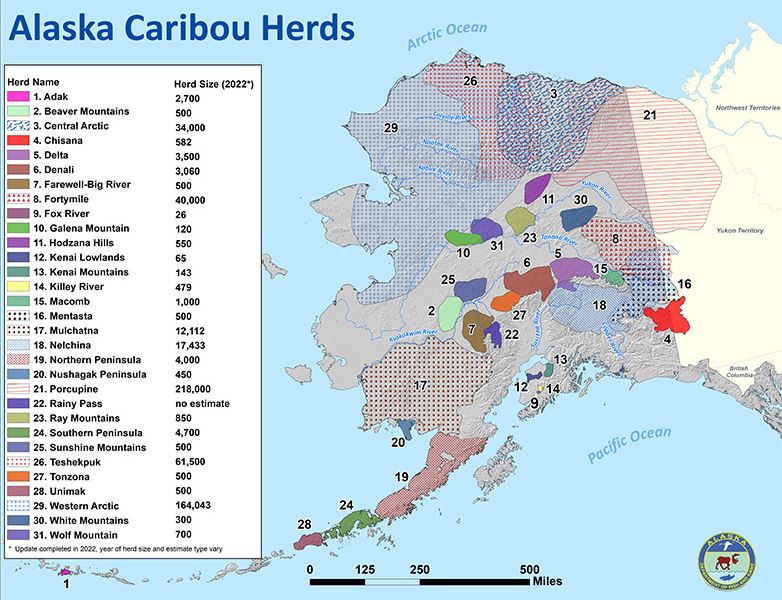
There are 31 herds of caribou in Alaska
Arctic migratory caribou were specifically mentioned in the 2024 Report card of the National Oceanic and Atmospheric Administration (NOAA). They reported that the herds had declined by 65% in the last 20 to 30 years. While Arctic caribou are generally quite adaptive, changes in temperatures in summer and autumn, together with greater encroachment by humans, are impacting their survival.
It’s a familiar story.
Sources:
-
Alaska Dept of Fish and Game. Caribou
-
National Park Service. Caribou v. reindeer
-
Alaska Guide Co. About Caribou.
-
Alaska Beacon. “Western Arctic Caribou Herd, long Alaska’s biggest, continues its population decline.” By Yereth Rosen Dec 10 2025
-
“Migratory Tundra Caribou in a Warmer Climate”
-
Alaska Photographics. Caribou photos.