
Native mythology and the role of shamans
When I started preparing for this post I developed a plan on how I thought it might flow. Then I read this article written by Mike Gaffney and Ray Barnhardt at the Alaska Native Knowledge Network, University of Alaska-Fairbanks, and my plan went out the window. It was not so much that I had been going down the wrong track. It was more that I realised that there was a much more interesting way to approach the topic.
In their essay, Gaffney and Barnhardt referenced another author, Dr. Oscar Kawagley, and it is with a quote from Kawagley’s book, “A Yupiaq Worldview” that I would like to kick off my post.
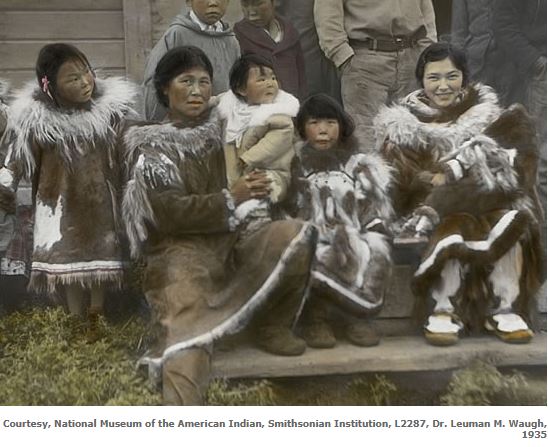
“Alaska Native peoples have traditionally tried to live in harmony with the world around them. This has required the construction of an intricate subsistence-based worldview, a complex way of life with specific cultural mandates regarding the ways in which the human being is to relate to other human relatives and the natural and spiritual worlds.
This worldview, as demonstrated historically by the Native peoples of Alaska, contained a highly developed social consciousness and sense of responsibility. As indicated by the writings of outside researchers and observers, Native peoples’ myths, rituals, and ceremonies were consistent with their relationship to one another and to their environment…
Wisdom, insight, knowledge and power were considered the prerogative of the elders, who were honored and respected in recognition of their achievements. Attitude was thought to be as important as action; therefore one was to be careful in thought and action so as not to injure another’s mind or offend the spirits of the animals and surrounding environment. For one to have a powerful mind was to be “aware of or awake to its surroundings.”
In these few paragraphs we get an understanding of the relationship between Alaskan natives and their environment and therefore how and why myths developed. Plus, the scene is set for the introduction of the shaman as an important person in enabling the people and their environment (both animal and nature) to coexist with an emphasis on reciprocity.
The Alaskan Native worldview and the development of myths
I described in an earlier post on Native Alaskan History and Cultures how the early native cultures started out living subsistence lifestyles, which predominantly centred around hunting and trapping animals. Individual practices depended on the season and the region. Either way, knowledge of the location and behaviour of the animals being hunted was critical. As Gaffney and Barnhardt explained; “Since Native life was totally dependent on fish and game, it should not surprise us that over time certain animals took on mythical qualities and spiritual meanings for the people directly dependent on them. These animals were, after all, the ultimate givers of human life.”
Ultimately, the principle behind the Alaskan Native practices was one of environmental protection. It was in the interests of the people to ensure that the cycle of life, of which they were intrinsically a part, would be preserved, so that future generations would be able to enjoy the same reliability of resources. Mythology added a spiritual layer to this ecological outlook, so that respect for the hunted animals and rituals around their hunting and killing, formed an important part of their daily life.
The myths
A core concept of Alaskan native mythology is animism, which is the idea that all animals and some inanimate objects, possess a soul. Therefore, respect becomes a key component in the relationship between the people and their prey on which they ultimately rely for survival. (The role of the shaman in this relationship is discussed below).
In stories, animals often possess human attributes (such as speech) and can shift between their animal and human forms.
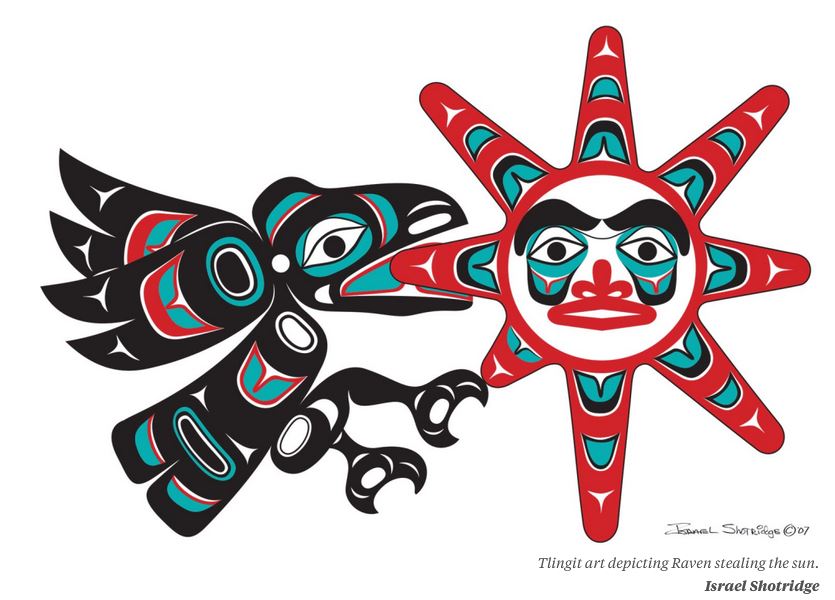
The Raven (or Crow) is probably the most well-known of the mythological figures, and appears in stories across a number of the tribes, predominantly as the creator of the world, but also as a rather mischievous character.
Katherine Berry Judson was a professor of History at the University of Washington, and is especially known for her work on native myths and legends in the early twentieth century. In 1911 Judson published her book, “Myths and Legends of Alaska” in which she compiled a collection of myths and legends which had been gathered by government ethnologists, and which are presented in the original tone and directness of the native storytellers who shared them.
In the first story in her book, Judson relates the Raven myth of the Bering Strait Eskimos, in which Man came from a pea pod, and Raven was somewhat perplexed…
“When Man looked up again he saw coming toward him, with a fluttering motion, something dark. He watched the dark thing until it stopped just in front of him. It was Raven.
As soon as Raven stopped, he raised one of his wings and pushed up his beak, as though it were a mask, to the top of his head. Thus Raven changed at once into a man. Raven stared hard at Man, moving from side to side to see him better.
Raven said, “What are you? Where did you come from? I have never seen anything like you.”
Raven still stared at Man, surprised to find this new thing so much like himself. He made Man walk around a little, while he perked his head from side to side to see him better. Then Raven said again in astonishment, “Where did you come from? I have never seen anything like you before.”
Man said, “I came from the pea pod”. He pointed to the plant from which he came.
“Ah, I made that vine,” said Raven. “But I did not know that anything like you would come from it. Come with me to the high ground over there; it is thicker and harder. This ground I made later and it is soft and thin.”
Raven myths have been told for centuries, handed down through family storytelling, remembered and retold. This site contains a wonderful collection of them; it is the result of a classroom collaboration which has been published on the Alaska Native Knowledge Network. I even discovered amongst the web pages “The Raven” written by Edgar Allen Poe. Fancy that!
In addition to the creation myths, Inuit mythology also consists of stories about the landscape and nature, about natural phenomena (which can be personified), about historical events, and also for the purpose of education.
Other characters in Inuit mythology include:
- Mahaha, a demon that tickles his victims to death;
- Ijiraat, shapeshifters that can change into any arctic animal but cannot disguise their red eyes;
- Taqriaqsuit, shadow people who are rarely seen but often heard;
- Qallupilluk, scaly, humanoid beings that snatch children into the sea;
- and the giants Inupasugjuk, and Tuniit, the simple-minded but extremely strong ancestors of the Inuit.
(The above list is courtesy of Alexandra Lazar, who published an essay on Inuit Mythology on the EBSCO Knowledge Advantage website, which can be found here.)
I also found an article in the Anchorage Daily News, in which Terrye Toombs described five Alaskan mythical creatures, the subjects of stories which were told to her as a child, which she was sure were designed to scare “the living daylights out of us and fill our nights with cold sweats and nightmares of baby-stealing child-eating monsters.” You will see that there are a couple of overlaps with the list above, as different native groups sometimes have similar stories, where the character has either a different name or different spelling of the same name.
- The Qalupalik is described as a creature similar to the Qallupilluk described above. The website added a link to an animation of the legend with unique images – it can be viewed here.
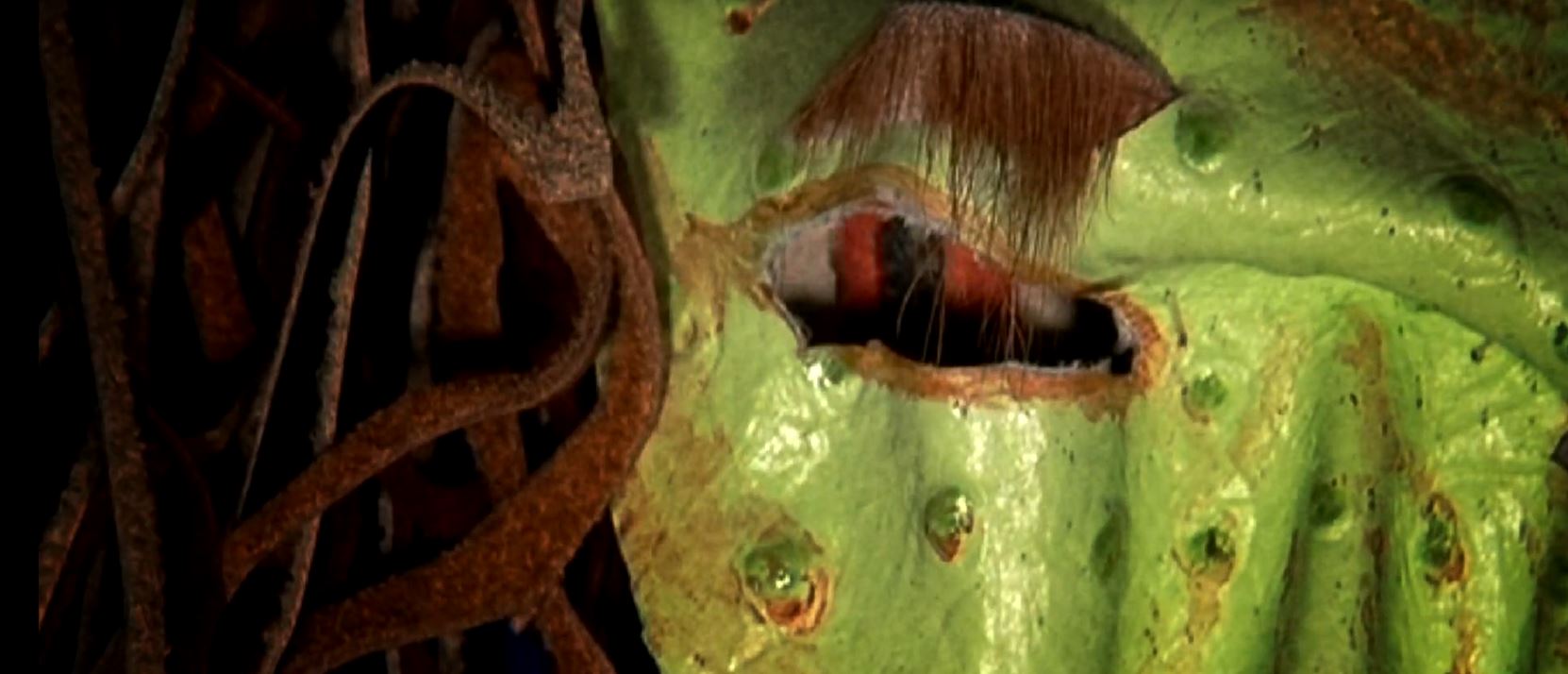
- The Tornits are also referred to as Alaskan Bushmen, and sound the same as the Tuniit above
- The Adlet is described as a creature with the lower body of a dog and the upper body of a human and is portrayed as ferocious. There is a Greenlandic version of the story featuring a Erqigdlit, which has been linked to the European werewolf legend.
- The Tizheruk is a large serpent-like creature which is reputed to snatch people from docks and piers.
- The Keelut is an evil spirit which takes the form of a black dog, with the only hair on its body being on its feet. The Keelut follows and attacks people out travelling at night.
Inuit myths – Alaskan myths – Arctic myths?
It is worthwhile commenting about the difference, or similarity depending on how you look at it, of the various myths across northern regions. The explanation is really based around differentiating the peoples themselves.
‘Arctic people’ is the umbrella term referring to a range of diverse indigenous groups of the north polar regions. They include people who traditionally inhabited the northern regions of Alaska, Canada, Greenland, Russia and the Nordic countries.
The Inuit are one subgroup of Arctic people who specifically reside in Alaska, Canada and Greenland. They can be differentiated from other Arctic people (including Sami and Yu’piks) by their language and traditions. In Alaska, they are known as Inupiaq, and are also closely related to Alaskan Yu’pik people.
Finally, the group of Alaskan Natives includes not only Inuit Alaskan groups but also the other Alaskan Natives groups (of non Arctic peoples), such as Aleut and Haida.
Naturally the environment, as well as the people’s history, influence the myths and legends, differentiating the stories, or aligning them, to reflect their respective worldviews.
Alaskan native hunting rituals and festivals
Because Alaskan Natives believe that all animals possess a spirit, and that they reincarnate, honouring the spirits of the animals which are killed in a hunt is important to ensure future hunts are successful. Examples of these ceremonies and rituals are:
- In the bladder festival of the Cup’ik people, the bladders of seals which are preserved after a hunt, are then returned to the sea, through the ice, so that the seals would return the next season.
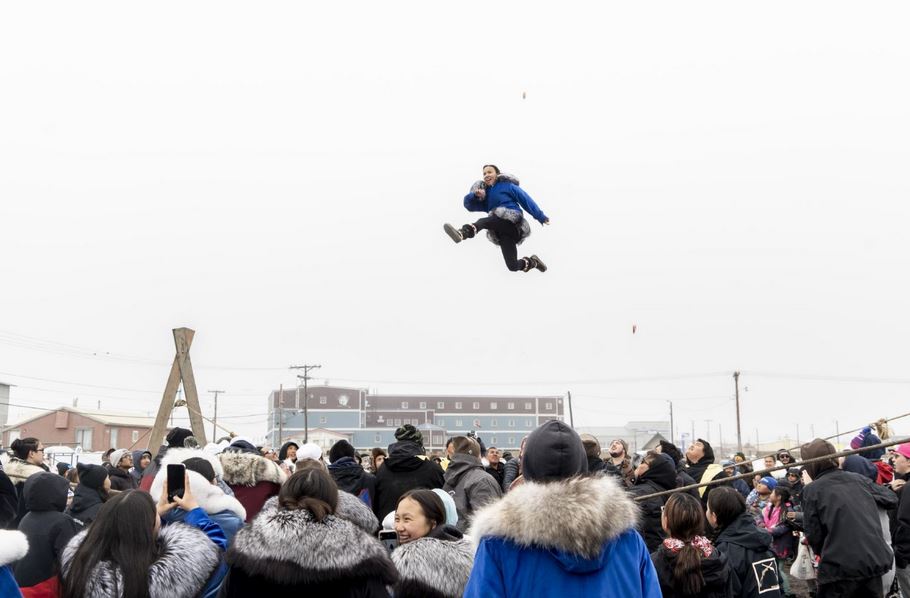
- The Inupiaq people hold the Nalukataq whaling festival each year to appease the spirits of the dead whales so that they return. The blanket toss is one activity of the festival.
- Koyukon Athabascan people believe that hunters should never speak of their plans out loud as the moose can hear. They should also never brag as this will result in the animals remaining scarce during a hunt.
- According to a Yup’ik tradition, when the fisherman brought home the first salmon catch of the season, a wormwood plant would be placed inside the mouth of each salmon, welcoming them with food.
- In Yup’ik culture the Seal Masks were “used both to celebrate the seals’ personhood, and to request their return in future years. Worn in enactments of past spiritual encounters, the masks had the power to evoke such encounters in the future.”
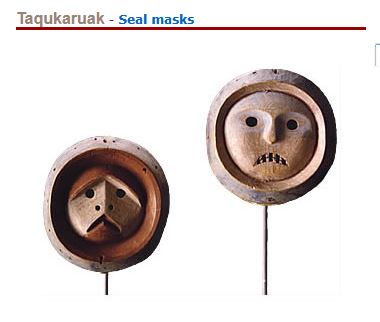
These practices (and there are many more) show just how different is the Alaskan Native worldview from our Western worldview, where Gaffney and Bernhardt explain that “most often Western man has viewed the natural environment as an obstacle to overcome, not as a sacred realm to be carefully used and maintained. “
Fortunately, many of the traditions, ceremonies and practices are being kept alive, if not in the traditional context, then through education and family teachings.
The role of the Shaman
The deep connection to nature of the Alaskan Native peoples is the context within which the role of the Shaman exists. As explained by Alexandra Lazar; “Unlike many other mythological systems, Inuit beliefs do not include divine rulers or punitive deities; instead, they emphasize taboos and rituals overseen by shamans, known as angakkuq, who serve as mediators between the human and spiritual realms.”
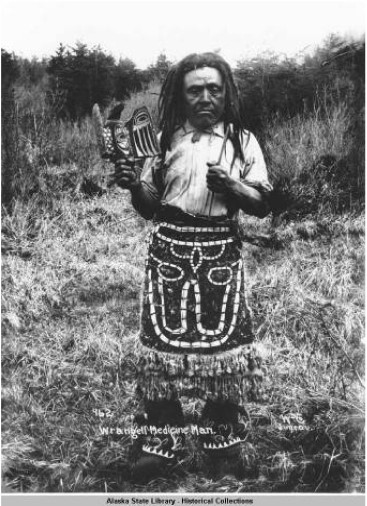
It is believed that shamans were not taught, rather they were chosen by the spirits.
The shaman contributed to the community in many ways:
- They were the mediator between the worlds.
- As communicator with the spirits, they were instrumental in reminding people how to appease them.
- They were diviners who made prophecies, often during rituals and ceremonies. This included the power to identify good hunting areas
- They were custodians of secrets of mystical power, including medicines and objects, such as amulets and charms.
- They also interpreted dreams
- And in some cultures they even accompanied leaders into battle
- All in all, a shaman was a community leader, providing advice and guidance for the community as a whole.
Over time, and because of the zealous missionaries, the role of shamanism in native communities, and the shamans themselves, became less influential.
Returning to “Arctic Dreams”
When I was preparing for my trip to the Arctic in 2024, I read “Arctic Dreams” by Barry Lopez. Remembering that Lopez wrote so passionately about our relationship with the earth, I went back to read what I had written in an earlier post, and found this quote from the book…
“ A Yup’ik hunter on Saint Lawrence Island once told me that what traditional Eskimos fear most about us is the extent of our power to alter the land, the scale of that power, and the fact that we can easily effect some of these changes electronically, from a distant city. Eskimos, who sometimes see themselves as still not quite separate from the animal world, regard us as a kind of people whose separation may have become too complete. They call us, with a mixture of incredulity and apprehension, ‘the people who change nature’.”
Let’s hope that we can find some part of the early native worldview which restores our connection to nature, and thereby helps to preserve it.
And let’s find it quickly!
Sources:
-
Alaska Native Knowledge Network. Essay: Alaska Native in Traditional Times: A Cultural Project Profile. Mike Gaffney and Ray Barnhardt. Also Raven in Southeast Mythology.
-
Myths and Legends of Alaska, by Katherine Berry Judson
-
EBSCO. Inuit Mythology by Alexnadra Lazar
-
Anchorage Daily News:Alaska Folklore; five mythical creatures of the Last Frontier. As recounted by Terrye Toombs
-
National Film Board of Canada. Nunavut Animation Lab: Qalupalik. Note that there are animations to view on other Inuit legends.
-
Travel Alaska website. Arts & Traditions
-
Encounters website. Traditional Knowledge: People of the Forest.
-
Anchorage Museum, The Calista Elders Council. The Way We Genuinely Live.
-
Brevig Memorial Lutheran Church, Brevig Mission, Alaska. . Essay By Larry Jorgenson: From Shamans to Missionaries: The Popular Religiosity of the Inupiaq Eskimo
-
Cosmovisions website. Exploring the Rich Heritage of Haida Mythology: Myths and Stories of Raven
-
High Country News. Following the path of the mythical Raven